



Artificial intelligence is not only changing but also redefining the very nature of business operations, competition, and expansion. Nonetheless, with AI gradually becoming a common thing in the business world, the security risks associated with it will also rise and spread like wildfire. Hence, every organization will have to come up with a new way to protect its data, systems, and digital assets. The classic security frameworks do not cater to AI and its technologies anymore. The end result is that, at the very least, companies will have to carve out new AI security architecture if they want to be safe, meet regulations, and not fall behind in competition. The present article will provide the reasons for the necessity of an AI security redesign, enterprise AI protection, and the existence of secure AI systems as business-critical factors.
AI Generates New Security Threats That Companies Are Not Allowed To Overlook
Firstly, AI-based systems entail the infusion of new risks that were unthought-of beforehand. Just to illustrate, fraudsters can take advantage of the AI models, alter the training data, or get access to the very sensitive outputs. Besides, the number of business data processed through AI is huge leading to more exposure. Hence, organizations will have no choice but to put in place, AI security risks, AI data protection, and AI threat prevention as immediate measures.
Moreover, cybercriminals adopt AI now as their weapon of choice for attack automation and they can do it faster than ever. As a result of this, the remaining old-fashioned security tools have no way of detecting these so-called advanced threats. Thus, it becomes a must that companies will have to construct an AI-ready cybersecurity architecture that will be able to both adapt to and respond to the threats in real time.
Traditional Security Architecture is not Suitable for AI Settings
To begin with, the classical security paradigm was aimed primarily at protecting the networks and the end-user devices. On the contrary, AI ecosystems have interactions between different entities like models, APIs, cloud, and data. Thus, with the old security measures, there are probably many unauthorized gaps through which attackers could gain access, for example, they would not be able to access the elements of model poisoning, prompt injection, or AI misuse.
Moreover, the AI applications keep on learning and changing their behavior Ensuing thus, administering static security rules becomes unfit for purpose. This gives rise to the necessity of security re-engineering with the application of AI security frameworks, AI system monitoring , and protection of models as the starting point of the process. These measures make sure that there is control and visibility throughout the entire AI life cycle.
The Use of AI Agents Raises Security Complexity
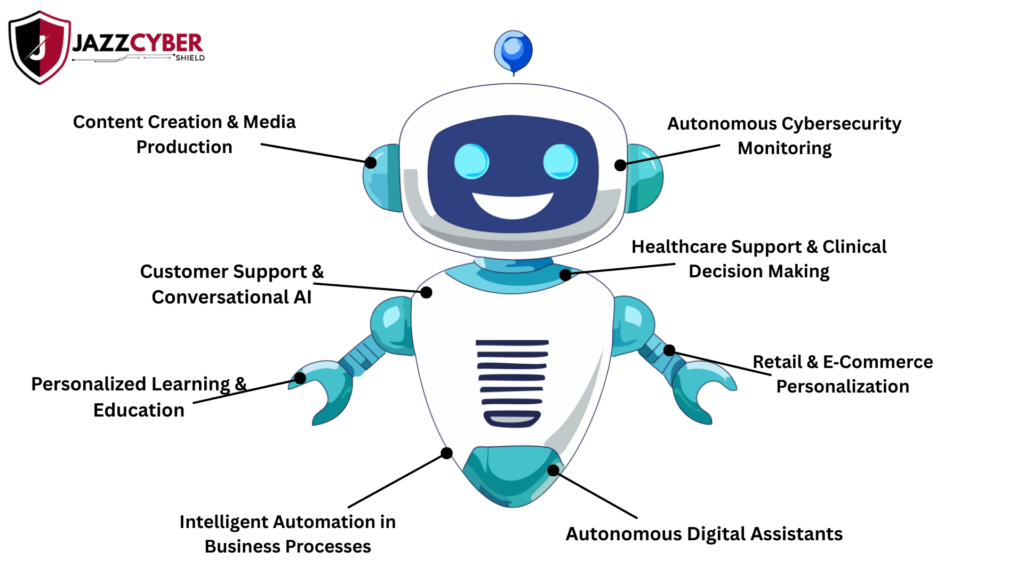
As a third point, numerous organizations resort to the use of AI techs for the purpose of carrying out Tasks. These machines are equipped to make a judgment call without the need for constant human supervision. However, this independence comes along with the potential of posing serious threats if the controls are weak. Thus, the security departments in the firms have to take the issue of risks that are associated with agent-based AI, the security of automated decisions and the monitoring of AI behavior as a priority.
Furthermore, AI agents are capable of obtaining information from internal systems, customers, and third-party tools. Hence, a single compromised agent can turn out to be a major source of damage. Therefore, access control, AI isolation layers, and real-time AI oversight need to be implemented as part of the invincible security infrastructure in business.
Compliance and Privacy Laws Mandate Secure AI Design
The fourth point is that governments have started to apply stricter norms related to data and privacy. Personal and strategic data is the usual AI system‘s input and output. Therefore, the non-compliance with the law can easily be a consequence of the inadequate security of the AI system. Consequently, the corporations must have a legal-conforming AI architecture that is safe from the very start.
On top of that, the regulators want the application of AI to be transparent, accountable, and attractive in terms of data protection. So, organizations are required to put in place AI governance controls, data encryption and audits among others. This not only minimizes legal risk but also enhances trust.
Shadow AI Produces Hidden Security Threats to Enterprises
Fifth, employees frequently use AI tools that have not been authorized by the IT department. This phenomenon is referred to as shadow AI. Unfortunately, by utilizing shadow AI, the company data becomes accessible to outside sources. Thus, it is a considerable security risk. Furthermore, the traditional systems are oblivious to these concealed operations.
In light of this, enterprises need to revamp their security including AI usage visibility, employee AI policies, and AI access management. Furthermore, providing training to employees on safe AI practices will lessen the internal risk. Consequently, organizations emerge with greater control and protection that is more robust.
Zero Trust Approach Is Indispensable For AI Security Design
The sixth point is that contemporary AI ecosystems demand Zero Trust security. Zero Trust means that at all times every user, device and AI system has to go through a verification process. Hence, a tool powered by artificial intelligence should not have the power to access, without restrictions, all data. This method does not only eliminate the possibility of insider threats but also the misuse of AI.
In addition, the AI technologies have already been acknowledged as the major components of the corporate workflow. Thus, the use of Zero Trust technology permits access to sensitive systems only to the persons who are authorized. Hence, companies should re-architect their security frameworks incorporating Zero Trust AI security, continuous authentication, and least privileged access.
AI Security Becoming a Part of Company Culture
In the first place, the seventh point, technology on its own cannot protect AI systems. People are the main factor. Hence, the creation of an AI security awareness culture is a necessity in companies. The employees must be informed about the AI risks, the safety measures, and the reporting channels.
Similarly, the management should assure the conducting of audits and updates regularly. The security strategies must not be static but should also be dynamic as the development of AI, so in this case, the tech companies should provide training on AI security training, carry out AI risk assessment and also implement continuous improvement programs.
Security That Is Ready for The Future Relies on AI To Protect AI
Moreover, the future of cybersecurity lies in the adoption of the defense systems that are powered by AI. The latter ones are very smart, as they not only detect threats but also analyze various behaviors as well as respond automatically without the need for human input. Therefore, there exists the necessity for the companies to change their existing security framework and implement AI-based threat detection along with smart security controls.
In addition, AI is able to foresee attacks even before any damage occurs. Consequently, organizations are able to cut their response time and cost. Thus, the practice of investing in AI cybersecurity automation guarantees the resilience of the organization in the long run.
Conclusion: Redesign AI Security Now, Not Later
In brief, companies need to re-engineer their security architecture for AI if they want to live and flourish. AI draws in new harms that old-style security is not able to handle. Hence, enterprises will be forced to go for AI-focused security models, Zero Trust principles, and robust governance frameworks.
If they do it now, companies will not only secure their data but also impress regulators and customers. More than anything else, they will be future-proof and the challenge of the AI era will not intimidate them. Rethinking the AI security has become an obligation rather than an option.


This blog post is both timely and insightful! I really appreciated how clearly it explains why traditional security models aren’t enough for AI-driven systems and why businesses need to rethink their approach. The real-world examples and emphasis on risk mitigation strategies make the topic easy to grasp even for non-experts. A very useful read for anyone involved in cybersecurity planning.
Excellent article! The author does a great job of breaking down the complexities of securing AI architectures without overwhelming the reader. I found the practical recommendations especially helpful, and the forward-looking perspective really highlights how security needs to evolve. Highly recommended for IT professionals and business leaders alike.