



Business organizations need to implement network automation as their mandatory requirement for 2026. Businesses are shifting away from manual network configuration alternatives because they are slow, error-prone, and costly. The implementation of AI network automation now brings fundamental changes to IT operational processes. Intelligent network automation enables networks to perform self-optimization and self-healing operations while they dynamically scale, which results in improved efficiency and decreased operational errors.
The Current State of Manual Network Configuration
Traditionally, manual network configuration requires engineers to configure routers and switches and firewalls and access policies through manual work. The engineers need to enter all IP address and VLAN and security rule information into the system. The process creates operational delays together with configuration mistakes and work productivity losses.
Human-driven network operations create three major problems because they produce operational errors and system outages and generate increased expenses. The smallest configuration errors have the potential to bring down whole business networks. The process of network configuration automation has become essential because network growth leads to high demand for AI-based solutions, which is demonstrated by the 2026 network automation trends.
What is AI-Driven Network Automation?
AI network automation operates through artificial intelligence and machine learning technology to handle automatic network management and configuration and optimization tasks. AI-based systems use network data to learn from previous experiences, which enables them to identify potential problems and make real-time decisions, which sets them apart from traditional scripted automation.
The main benefits which network automation through AI delivers involve increased operational efficiency and decreased error rates together with predictive maintenance capabilities. Leading companies are already using AI network management solutions to streamline operations. The IT teams gain strategic task handling capacity through automated network management which uses AI for routine updates and configuration management.
Key AI Technologies Powering Network Automation
The operation of AI-powered network systems depends on multiple technologies.
- Machine Learning predicts network failures and optimizes resources.
- Deep Learning detects anomalies for security and performance improvements.
- AI network orchestration automates provisioning and policy enforcement.
- AI network optimization ensures optimal bandwidth, low latency, and traffic prioritization.
Next-gen network automation depends on these technologies which enhance network reliability and security while improving operational efficiency.
How AI is Replacing Manual Configuration in 2026
By 2026, AI replacing manual network configuration is becoming a reality. AI systems handle real-time automated network provisioning, dynamically adjusting configurations without human input.
Self-healing networks enable automatic issue resolution which leads to decreased downtime and enhanced system performance. Enterprises using network automation tools 2026 report faster deployments, fewer errors, and significant operational cost savings. The network automation software tools which will exist in 2026 enable complete replacement of all repetitive manual work.
Advantages of AI-Powered Network Automation
Intelligent network automation through AI technology produces multiple advantages.
- Efficiency and Reduced Errors: AI eliminates repetitive manual tasks which leads to fewer mistakes.
- Faster Deployment: The network system automatically expands its capacity whenever there is an increase in user needs.
- Cost Savings: The organization experiences lower operational costs because it requires less staff work and experiences fewer system downtimes.
- Improved Security: AI performs constant analysis of network traffic to identify security breaches.
AI network configuration tools enable organizations to create networks which function from a proactive operational mode. Businesses which implement network automation deployment 2026 strategies experience measurable improvements in their system availability and service dependability.
Challenges and Considerations
AI network automation provides benefits but it also creates several operational difficulties.
- Data privacy and security: AI accesses sensitive network data.
- Integration complexity: The process of merging AI capabilities with established systems presents significant obstacles.
- Skilled workforce requirement: Teams need knowledge of network automation best practices.
- Over-reliance on AI: Human supervision remains essential because AI systems can produce errors.
Organizations can use 2026 network automation trends to decrease potential dangers while they derive advantages from AI technologies.
Future Trends in Network Automation
The future of network automation points toward fully autonomous networks. The main developments involve
- Integration with cloud-native architectures.
- Edge computing combined with AI network orchestration.
- Predictive analytics for proactive maintenance.
- The network automation software 2026 which will be used by large organizations.
By 2026 networks will achieve complete self-management capabilities which will decrease their dependence on human management. This shift will allow IT personnel to dedicate their time to innovative tasks.
Best Practices for Adopting AI Network Automation
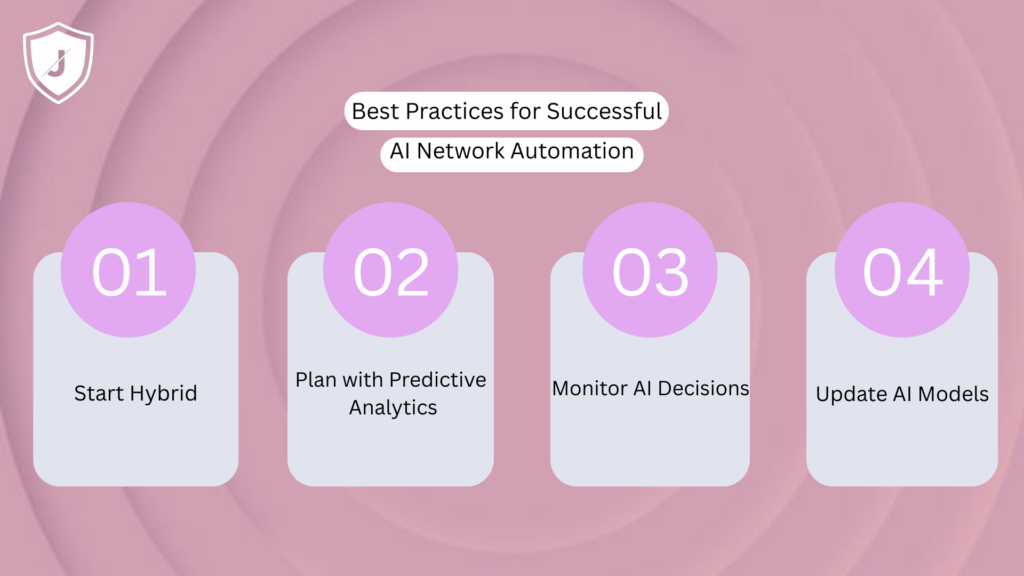
To achieve success in AI network automation organizations must follow these essential steps.
- Organizations should begin their automation efforts with hybrid automation before they proceed to implement full AI systems.
- Predictive analytics should be used for intelligent network planning.
- AI decision processes require continuous monitoring which needs systems that track all decision paths.
- The organization needs to implement ongoing AI model updates which will enhance their capabilities for automating network configuration processes.
The organization needs to execute network automation best practices because this approach will help them create seamless transitions while achieving maximum returns from their AI systems.
Case Studies / Examples
Organizations which implement AI for their network operations achieve better results than their competitors. Companies leveraging network automation tools 2026 have achieved reduced downtime, faster deployment, and improved efficiency. The case studies demonstrate that organizations should implement gradual AI adoption while they work on complete system integration with their current technology.
Frequently Asked Questions (FAQs)
1. What is AI network automation?
AI network automation uses artificial intelligence to automatically configure, manage, and optimize networks, replacing many manual processes.
2. How does AI replace manual network configuration?
AI technology enables automatic device provisioning, policy enforcement, real-time anomaly detection, and issue resolution which eliminates the need for human intervention.
3. What are the benefits of AI-driven network automation?
The advantages provide organizations with better operational performance at decreased expense while their system security gets enhanced protection and they achieve quicker implementation.
4. Are there risks with AI network automation?
The system contains various risks which include data privacy issues and problems with system integration and the potential for users to depend too much on AI technology. The organization can reduce these risks through effective system monitoring and maintenance of complete audit trails.
5. When will AI fully replace manual network configuration?
Organizations currently experience partial network configuration replacement through AI technology but next-generation network automation will establish complete autonomous networks as the new industry standard within upcoming years.
Conclusion
The year 2026 will bring network automation which will change how IT departments operate their systems. The implementation of AI network automation enables organizations to transform their network systems through automated self-management functions which eliminate the need for manual network configuration. Organizations that implement AI-based network operations today will experience increased efficiency, reduced expenses, enhanced security measures, and network systems that meet future requirements.

