



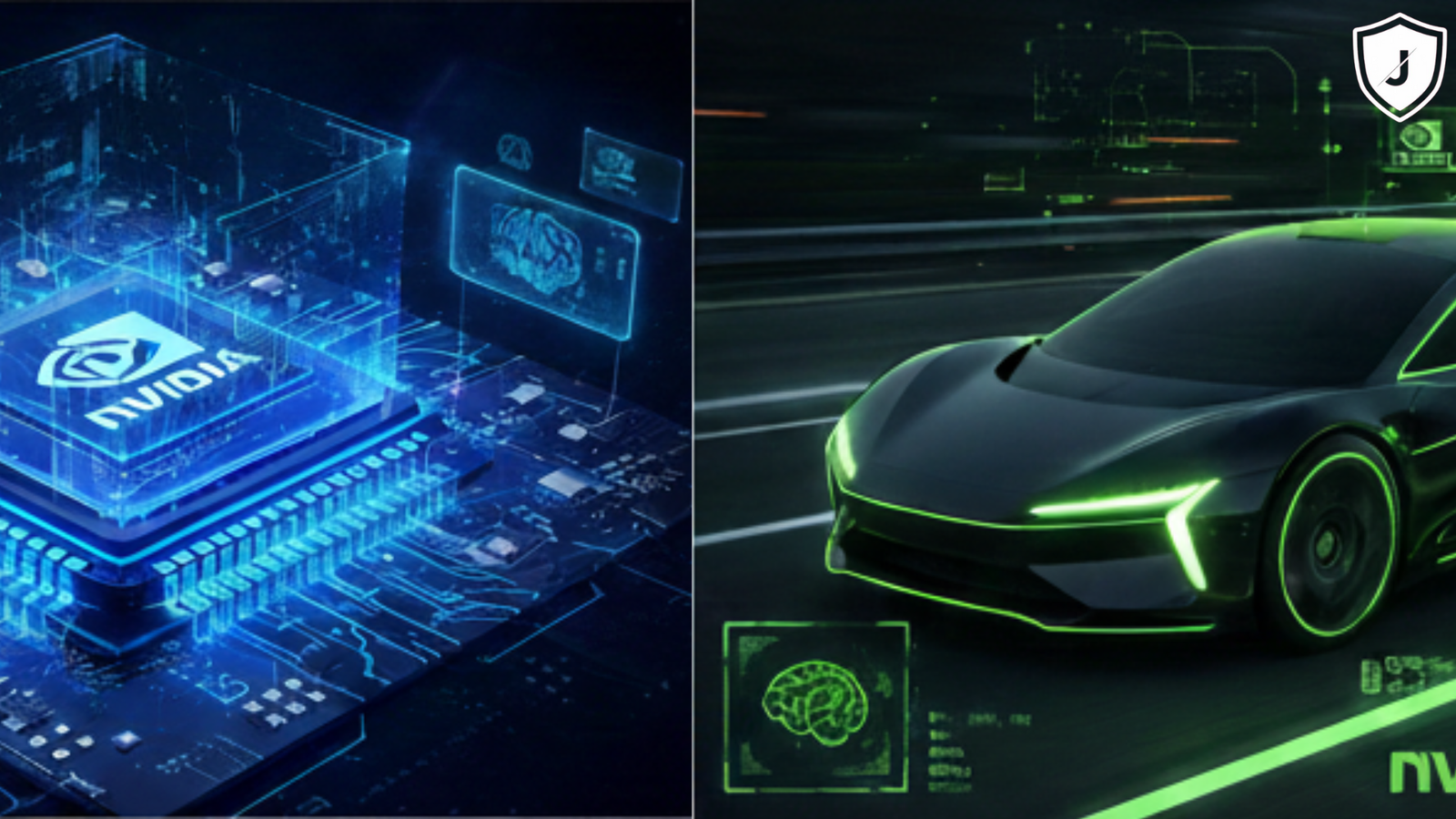
In 2026, Nvidia dominated CES with bold & future focused announcements. First, the company revealed its powerful Vera Rubin architecture & at the same time, it showcased AI systems that directly challenge Tesla’s autonomy vision. Moreover, Nvidia made it clear that it is no longer just a chip company. Instead, it is becoming a full AI platform leader. Because of these move, CES 2026 marked a turning point for artificial intelligence & advanced computing.
Vera Rubin Architecture: Nvidia’s Biggest Leap Yet
At CES 2026, Nvidia introduced Vera Rubin, its next generation AI architecture. First, this platform replace older design with a fully integrated system. Second, it focus on rack scale AI rather than single chips. Third, it deliver massive performance gain with better efficiency. As a result, Vera Rubin set a new standard for AI infrastructure.
Vera Rubin combines hardware, networking & data processing into one unified system. Because of this approach, AI workloads move faster & cost less. Additionally, developer can train & deploy complex AI models more easily.

Key components of the Vera Rubin platform include:
- High performance AI-focused CPU
- Next generation GPU optimized for reasoning & training
- Advanced chip-to-chip communication system
- Secure data processing units
- Ultra-fast networking architecture
Together, these components allow AI systems to scale faster, operate smarter & consume less power.
Why Vera Rubin Matters for AI Performance
Vera Rubin is not just faster. Instead, it is smarter & more efficient. First, it reduce the number of chips needed for large AI tasks. Next, it lower energy consumption. Then, it dramatically cut AI operating costs. Because of these improvements, organizations build larger AI models without increasing infrastructure complexity.
Compared to previous generations, Vera Rubin offers:
- Multiple times faster AI training
- Significantly improve inference speed
- Lower cost per AI task
- Better scalability for enterprise workloads
As a result, cloud provider, research labs & enterprises push AI innovation forward without hitting hardware limits.
Production Timeline & Market Readiness
Unlike concept announcements, Vera Rubin is already moving into production. First, Nvidia confirmed large scale manufacturing plans. Next, enterprise partners began preparing deployments. Finally, cloud platforms aligned their future infrastructure around this architecture. Because of this readiness, Vera Rubin will appear in real world systems throughout 2026.
This rapid rollout shows strong demand for AI computing power. Moreover, it prove that Nvidia is responding directly to market needs. As AI adoption grows across industries, infrastructure like Vera Rubin become essential rather than optional.
Tesla-Rivaling AI: Nvidia Enters the Autonomy Race
Alongside hardware, Nvidia reveal major advances in autonomous & reasoning AI. First, the company demonstrated AI systems capable of real time decision making. Next, it showed how these systems understand complex environments. Then, it positioned this technology as a direct competitor to Tesla’s autonomous driving efforts.
Nvidia’s autonomous AI focuses on agentic intelligence. This means AI systems:
- Perceive surroundings accurately
- Reason through complex scenarios
- Make decisions without human input
- Learn continuously from real world data
Because of these abilities, Nvidia’s AI platforms now rival Tesla’s self-driving technology in capability & ambition.
How Nvidia’s AI Differs from Traditional Autonomy
Traditional autonomous systems follow predefined rules. However, Nvidia’s AI works differently. First, it reasons instead of reacting. Second, it adapts instead of repeating patterns. Third, it improve continuously through simulation & learning. As a result, Nvidia’s approach feel closer to human decision making.
This shift matters because real world environments are unpredictable. Roads change. Conditions vary. Situations evolve. Nvidia’s AI systems handle these changes more effectively, making them suitable for:
- Autonomous vehicles
- Robotics
- Smart factories
- Physical AI environments
Expansion of Nvidia’s AI Software Ecosystem
In addition to hardware, Nvidia expanded its AI software ecosystem. First, it introduced new simulation tools. Next, it enhanced AI training frameworks. Then, it improve real time inference platforms. Because of this expansion, developers now have a complete AI stack.
Key benefits of Nvidia’s software ecosystem include:
- Faster AI model development
- Real world simulation before deployment
- Better integration between hardware & software
- Reduced development time for complex AI systems
As a result, Nvidia offer an end-to-end AI solution rather than isolated products.
Impact on Gaming & Consumer Technology
Although enterprise AI dominated CES 2026, Nvidia did not ignore consumers. First, it upgraded AI powered graphics technologies. Next, it improve cloud gaming performance. Then, it introduced display innovation for smoother visuals. Because of this balance, Nvidia continues to support both gamers & professionals.
Consumer focused improvements include:
- Enhanced AI upscaling for better visuals
- Reduced latency in cloud gaming
- Advanced display synchronization technology
These updates show Nvidia’s commitment to innovation across markets.
Why These Announcements Matter Long Term
Together, Nvidia’s CES 2026 announcements reveal clear strategy. First, the company is scaling AI infrastructures. Second, it is entering autonomous intelligence markets. Third, it is building a complete AI ecosystem. Because of this strategy, Nvidia shape the future of computing rather than reacting to it.
For businesses, this means faster AI adoption. For developers, it mean better tools. For industries, it mean smarter systems. And for consumers, it means AI becomes more reliable & useful in daily life.
Jazz Cyber Shield
Jazz Cyber Shield closely track developments like Nvidia’s CES 2026 announcements because powerful AI infrastructure changes the cybersecurity landscape. As AI systems grow smarter & faster, security risks also increase. Jazz Cyber Shield help organizations understand emerging AI technologies, prepare secure digital environments & protect systems as AI adoption accelerate across industries.
Conclusion
CES 2026 confirm Nvidia’s leadership in artificial intelligence. The Vera Rubin architecture set a new benchmark for AI performance & efficiency. Meanwhile, Nvidia’s Tesla rivaling AI systems show its ambition beyond hardware. Together, these announcements define next phase of AI innovation.
As AI become more powerful, organizations stay informed & prepared. Nvidia’s roadmap shows where technology is heading. Those who adapt early will gain a clear advantage in the years ahead.


Nvidia’s AI advancements at CES 2026 are impressive, especially with the potential to rival Tesla. It’ll be interesting to see how this technology influences everything from self-driving cars to AI in healthcare.