




In today’s fast-paced digital world, internet access is no longer a luxury; it’s a necessity. From remote work and online learning to entertainment and social interaction, a reliable internet connection is crucial for staying connected. However, not everyone has access to high-speed internet, especially in rural or remote areas. This is where Starlink comes in — a revolutionary satellite internet service that promises to bring reliable internet to the most underserved corners of the globe. But what exactly is Starlink, and how does it work?
Starlink and Its Purpose in Global Connectivity
Starlink is a satellite-based internet service developed by SpaceX, the private aerospace company founded by Elon Musk. It is designed to provide high-speed, low-latency internet to users worldwide, particularly those in rural, remote, or hard-to-reach locations. Where traditional broadband services may not be available or feasible. Unlike traditional internet services that rely on cables or fiber-optic connections. Starlink uses a constellation of small satellites in low Earth orbit (LEO) to beam internet signals directly to ground stations.
How Does Starlink Work?
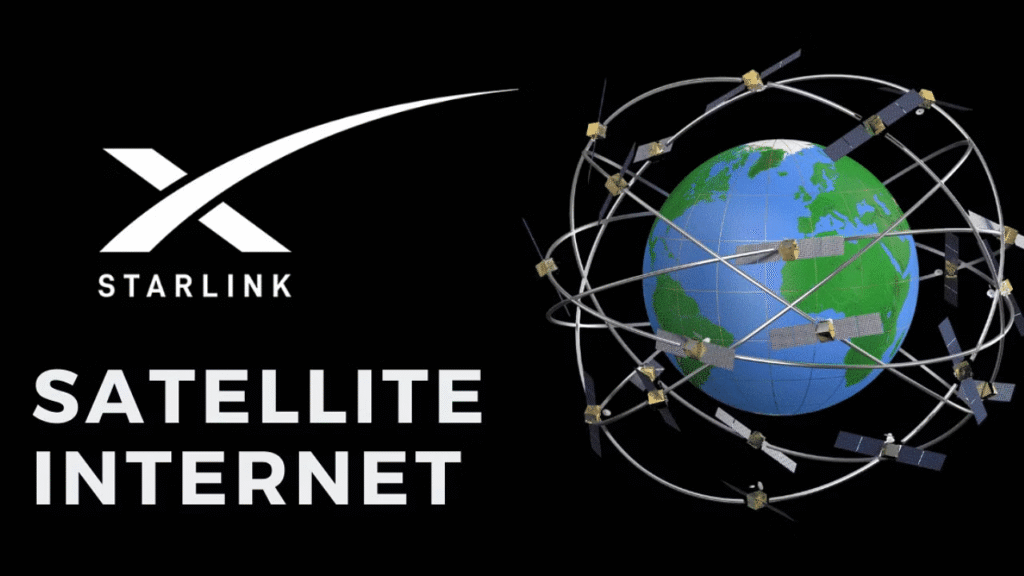
Starlink uses thousands of small satellites that orbit close to Earth, between 340 km and 1,200 km, which is much lower than old satellite systems. Because these satellites are closer, the fast internet speeds and has less delay. To use Starlink, people only need a Starlink dish and a modem. The dish sets itself automatically and must be placed in an open area with a clear view of the sky. After it is set up, the dish connects to the satellites, and the satellites send data to Starlink ground stations. The data then travels through fiber-optic networks and reaches users almost instantly, allowing smooth browsing, streaming, and gaming.
Key Benefits of Starlink
- Global Coverage: One of the standout features of Starlink satellite internet is its ability to provide global coverage, even in remote and rural areas. Traditional internet infrastructure, like fiber internet or DSL, often requires extensive groundwork to reach isolated locations. But with Starlink, users can access high-speed internet virtually anywhere.
- High-Speed Internet: Starlink aims to deliver speeds ranging from 50 Mbps to 200 Mbps. Which is more than sufficient for most everyday internet activities like browsing, video calls, and streaming. As more starlink satellites are launched, speeds are expected to increase.
- Low Latency: Thanks to the low Earth orbit of Starlink satellites. The service is able to offer low latency. Which is crucial for real-time applications such as online gaming, video conferencing, and VoIP calls. Latency is typically between 20ms and 40ms, which is comparable to wired broadband connections.
- Reliability in Remote Areas: Starlink’s satellite-based model ensures that even the most remote areas can receive reliable internet access. Whether you’re living in a mountainous region, out on the open sea, or on a farm far from urban centers. Starlink promises to keep you connected.
- Future Scalability: As SpaceX continues to launch more satellites, Starlink’s capacity and speed are expected to improve. Eventually, the service could provide gigabit-speed internet to more users around the world, further revolutionizing global connectivity.
Who Can Benefit from Starlink?
- Rural Communities: People living in areas with little to no access to traditional internet services. It can finally experience fast and reliable connectivity.
- Remote Work and Digital Nomads: For individuals working remotely or those who travel frequently, Starlink offers a portable internet solution. Which works from almost anywhere on the planet.
- Disaster Recovery: In areas affected by natural disasters, where infrastructure may be damaged, Starlink can provide quick, temporary internet access to aid recovery efforts and facilitate communication.
- Ships and Aircraft: Starlink has the potential to transform internet access on ships and aircraft, providing reliable connectivity for travelers and businesses operating in hard-to-reach environments.
Starlink’s Growing Network
Currently, Starlink is in its beta phase, with the service available in over 40 countries. This massive satellite constellation is expected to improve internet speeds, reduce congestion, and bring high-quality broadband services to areas where other providers have struggled to reach.
Challenges and Limitations
While Starlink has garnered a lot of excitement, it’s not without its challenges. For instance, the initial setup cost for the satellite dish and modem can be quite high (currently around $499), although prices are expected to drop as more technology is developed and production scales up.
Another concern is the environmental impact of launching thousands of satellites into space. While Starlink has taken steps to minimize the risk of space debris and ensure the safe deorbiting of old satellites, the rapid expansion of satellite networks raises questions about long-term sustainability and space traffic management.
Is Starlink Worth It?
Whether or not Starlink is worth it depends on your location and internet needs. If you live in an area with unreliable or slow internet options, Starlink could be a game-changer, offering a much-needed alternative. For urban dwellers with access to fiber-optic or cable broadband, Starlink may not yet be the most cost-effective option, especially given the installation fees and equipment costs.
However, with ongoing improvements and the promise of faster speeds, Starlink is poised to be a significant player in the global internet market. Its potential to provide fast, reliable, and affordable internet to every corner of the Earth is an exciting prospect for individuals, businesses, and communities alike.
Final Thoughts
Starlink represents a bold leap forward in the evolution of internet connectivity. By leveraging cutting-edge satellite technology, SpaceX aims to bridge the digital divide, ensuring that people in even the most remote locations have access to high-speed internet. As Starlink continues to grow and evolve, it could transform how we connect, work, and communicate in the coming years.
Whether you’re looking to stay connected while living off the grid or you’re just curious about the future of global internet coverage, Starlink is definitely a name to watch in the world of tech innovation.


very informative about starlink details.