




Users expect instant digital experiences. They stream 4K videos, join live meetings, play multiplayer games, and use cloud apps daily. At the same time, businesses depend on fast data processing to stay competitive. Therefore, internet speed directly impacts revenue, engagement, and search rankings.
Milliseconds now matter more than ever. Even a slight delay can reduce conversions, interrupt video streaming, or disrupt financial transactions. Moreover, Google rewards fast-loading websites, which makes low latency network infrastructure critical for SEO. As a result, companies are investing in edge infrastructure for low latency to meet rising expectations.
Latency is expensive. Slow platforms increase bounce rates and hurt customer trust. Additionally, centralized cloud systems struggle to deliver real-time responsiveness at scale. Consequently, organizations are turning to goodbye latency edge computing strategies that bring computing closer to users and transform internet performance.
What Is Internet Latency?
Internet latency measures the time it takes for data to travel from a user to a server and back. In contrast, bandwidth measures how much data can be transferred at once. Therefore, bandwidth affects capacity, while latency affects responsiveness.
Latency increases due to physical distance, network congestion, and inefficient routing. Furthermore, overloaded centralized data centers add delays during peak hours. Traditional cloud models often worsen the issue because data must travel long distances before processing.
For example, streaming platforms buffer, online gaming lags, fintech transactions slow down, and IoT devices respond late. Therefore, understanding how edge computing reduces latency is essential for businesses that rely on speed and performance.
The Limits of Traditional Cloud Infrastructure
Centralized cloud infrastructure revolutionized computing. However, it was not designed for ultra-low latency demands. Hyperscale data centers are usually located in specific regions. As a result, users far from these hubs experience slower response times.
During peak traffic, bottlenecks occur. Video streaming platforms struggle with buffering, and remote work tools face connectivity issues. Additionally, financial trading systems require millisecond-level speed, which centralized routing cannot always guarantee.
This is where the edge vs cloud latency comparison becomes clear. Cloud-only systems prioritize scalability, while edge-enabled systems prioritize proximity and speed. Therefore, businesses now adopt enterprise edge infrastructure solutions to improve distributed performance and reliability.
What Is Edge Infrastructure?
Edge infrastructure places computing resources near end users. Instead of sending all data to centralized cloud servers, it processes information at local nodes. Consequently, this approach supports edge computing for internet speed and delivers faster response times.
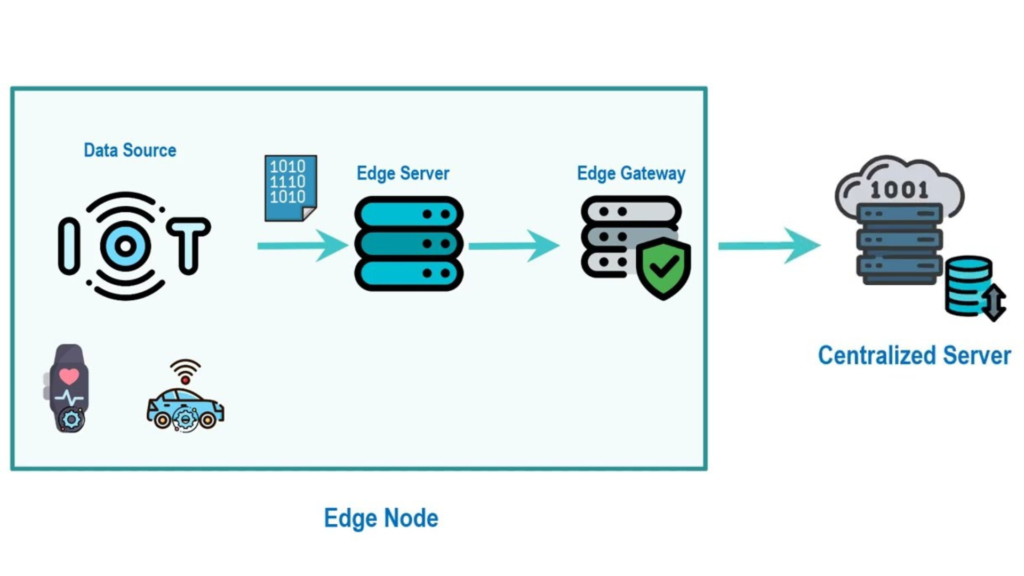
Edge data centers for faster internet are smaller, regionally distributed facilities. They reduce the physical distance data must travel. Additionally, local edge servers for faster websites help businesses deliver content instantly.
Key components of modern edge architecture include:
- Content delivery edge computing through CDNs that cache content near users
- Multi access edge computing benefits, which integrate computing power within telecom networks
- Edge computing for 5G latency reduction, enhancing mobile performance
- Distributed nodes that improve decentralized internet infrastructure speed
Together, these elements create a scalable, high-performance system built for low-latency digital experiences.
How Edge Infrastructure Reduces Latency
Edge infrastructure reduces latency by processing data closer to the source. Instead of traveling across continents, data moves to a nearby node. As a result, round-trip time drops significantly.
Shorter routing paths minimize packet delays. Moreover, distributing traffic across multiple locations prevents congestion. Therefore, reducing network latency with edge improves reliability and user satisfaction.
Edge systems also enhance distributed edge network performance by balancing workloads dynamically. Real-time analytics and AI processing occur locally, which supports edge computing for real time applications such as gaming, video conferencing, and IoT.
When comparing cloud-only models to edge-enabled systems, the difference is measurable. Cloud adds travel distance. Edge removes unnecessary hops. Consequently, businesses achieve ultra low latency internet solutions that meet modern performance standards.
Industries Being Transformed by Edge Computing
Online Gaming
Online gaming demands instant responsiveness. Even a small delay affects competitive performance. Therefore, developers deploy edge servers to support edge computing for real time applications. As a result, players experience smoother gameplay and lower ping.
Streaming & Media
Streaming services rely on content delivery edge computing to reduce buffering. Instead of pulling data from distant cloud servers, users access nearby cached content. Consequently, playback becomes seamless and high quality.
Finance & Trading
Financial markets require millisecond precision. High-frequency trading platforms depend on ultra-fast execution. Therefore, edge infrastructure for low latency ensures rapid transactions and real-time fraud detection.
Healthcare
Healthcare systems increasingly depend on real-time data. Remote patient monitoring and AI diagnostics require instant analysis. As a result, edge computing enhances reliability and responsiveness.
Smart Cities & IoT
Smart cities rely on connected sensors, traffic systems, and autonomous vehicles. These applications demand immediate communication. Consequently, edge architecture supports decentralized internet infrastructure speed and enables intelligent urban systems.
Edge + 5G: The Speed Multiplier
5G networks significantly reduce latency compared to 4G. Additionally, they increase data throughput and device connectivity. Therefore, combining 5G with edge computing creates powerful performance gains.
Edge computing for 5G latency reduction allows telecom providers to deliver near-instant communication. Moreover, multi access edge computing benefits enable operators to integrate compute resources directly into mobile networks.
Telecom providers now implement a strong telecom edge infrastructure strategy to meet rising data demands. As a result, businesses benefit from improving broadband speed with edge while supporting AI, AR/VR, and autonomous systems.
This synergy accelerates innovation. It also strengthens low latency network infrastructure for the next generation of digital services.
Business Benefits of Edge Infrastructure
Edge infrastructure enhances user experience. Faster websites increase engagement and reduce bounce rates. Moreover, local edge servers for faster websites improve Core Web Vitals.
Higher speed leads to higher conversions. For example, faster checkout processes reduce cart abandonment. Additionally, distributed architecture lowers bandwidth costs by processing data locally.
ISPs also benefit. Edge infrastructure benefits for ISPs include reduced backbone congestion and improved service quality. Furthermore, distributed systems support scalable expansion without sacrificing performance.
Enterprises adopting enterprise edge infrastructure solutions gain competitive advantages. They achieve better reliability, stronger security, and improved scalability. Therefore, edge computing is becoming central to digital transformation strategies.
Challenges of Implementing Edge Infrastructure
Despite its advantages, edge deployment requires investment. Building regional nodes and managing distributed systems increases complexity. Additionally, maintaining security across multiple endpoints demands strong cybersecurity frameworks.
Data synchronization across edge locations can also be challenging. However, modern orchestration tools simplify integration between cloud and edge environments. Therefore, businesses can implement edge strategies efficiently while maintaining performance standards.
The Future of Internet Speed
The internet is moving toward distributed architecture. Instead of relying on centralized hubs, networks now operate across thousands of regional nodes. Consequently, distributed edge network performance continues to improve globally.
AI-driven optimization tools further enhance routing efficiency. Moreover, decentralized systems strengthen resilience and reduce downtime. As demand grows, edge computing for internet speed will become standard infrastructure.
Over the next decade, industries will increasingly adopt ultra low latency internet solutions powered by edge and 5G integration. Therefore, edge infrastructure will define the future of digital connectivity.
Conclusion: The End of Latency as We Know It
Latency has limited internet performance for decades. However, edge computing changes the landscape. By processing data closer to users, organizations dramatically improve speed, reliability, and responsiveness.
From gaming to finance, and from healthcare to smart cities, industries rely on reducing network latency with edge solutions. Moreover, combining 5G with distributed edge systems unlocks new possibilities.
In short, goodbye latency. Edge infrastructure is revolutionizing internet speed and shaping the next generation of high-performance digital experiences.


