



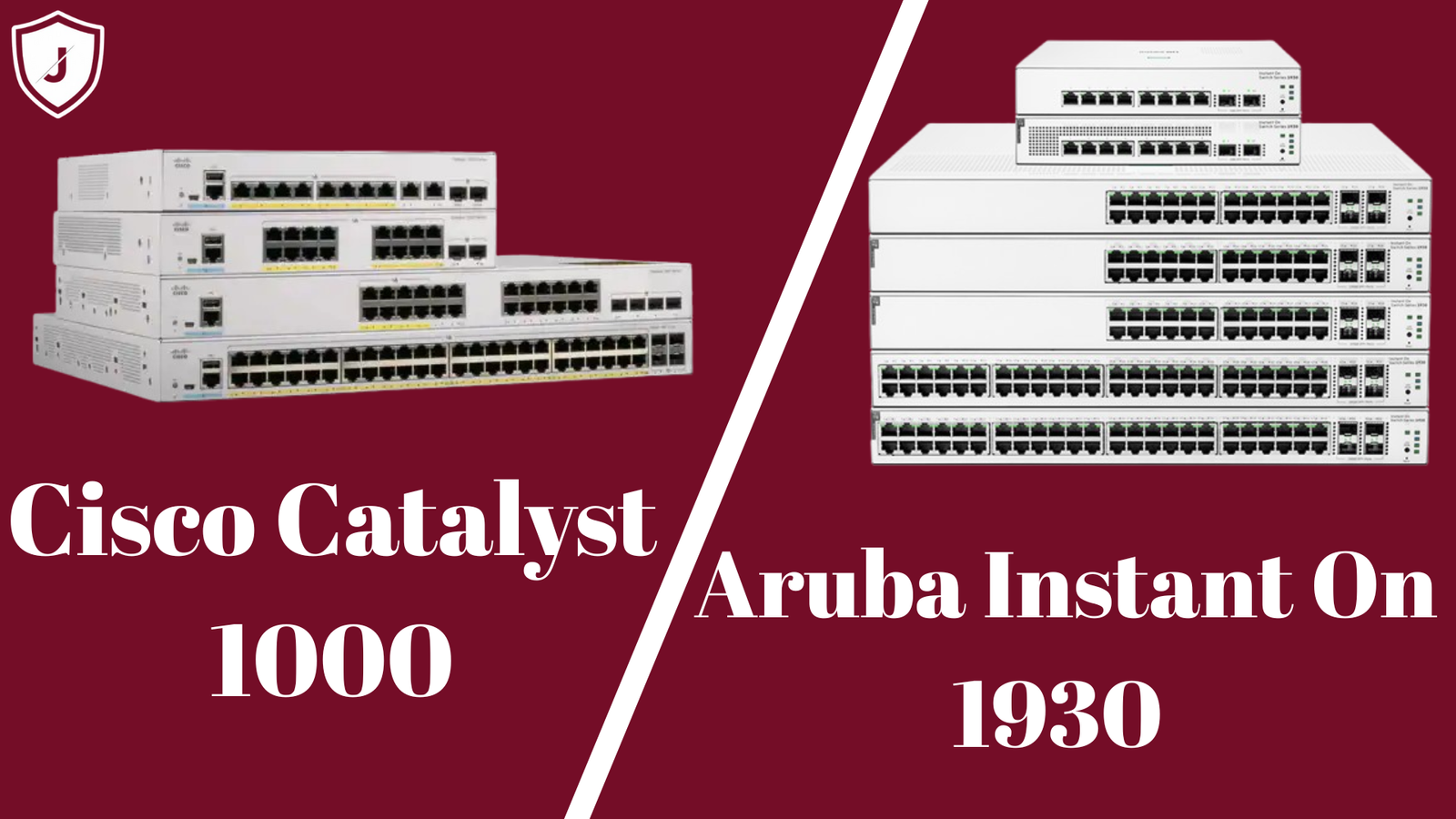
In 2025, small‐to‐medium businesses (SMBs) & branch services are facing ever‐adding demands more connected devices, heavier videotape/VoIP business, IoT endpoints & tighter budgets. When it comes to network access switches, two fixed “smart/managed” access subcaste results stand out the Cisco Catalyst 1000 Series vs Aruba Instant On 1930 Series.
The key questions we will answer
- What are the major specialized differences?
- Which delivers better value in terms of purchase cost manageability inflexibility?
- In which scripts do one make more sense than the other?
- Ultimately if you were buying a moment (2025) for an SMB network, which would you pick and why?
Overview: What are these switches?
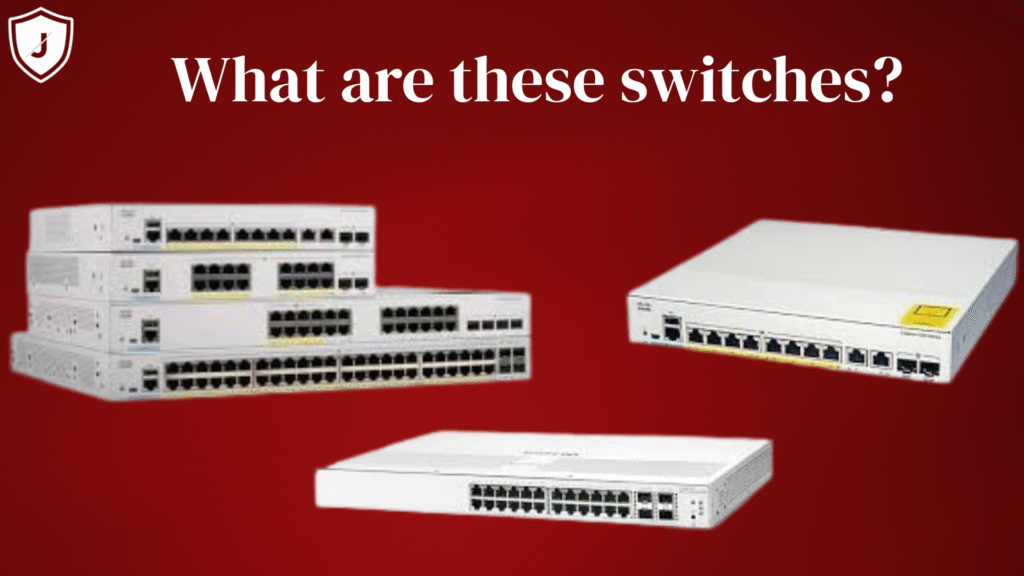
Cisco Catalyst 1000
The Catalyst 1000 Series by Cisco is a fixed managed Gigabit Ethernet/Fast Ethernet access switch family designed for small businesses & branch services.
It supports models with 8, 16, 24 or 48 ports, PoE options, uplinks via SFP or SFP+ & runs Cisco IOS software.
Features include web ‐UI, CLI, original operation, strong security features (ACLs, VLANs, etc.) & a compact, fanless design (in lower models) suitable for visible deployment.
Aruba Instant On 1930
The Instant On 1930 Series (from Aruba/HPE) is a “smart-managed” (occasionally called cloud/managed-via-app) switch line aimed at SMBs. It offers 8-, 24-, 48-ports models; Class 4 PoE (PoE+), 1Gb & 10 Gb uplinks via SFP on larger harborage counts.
It supports operation via mobile app or cloud gate (Instant On portal) as well as original web GUI.
Value Considerations in 2025
When assessing value in 2025, you should look beyond purchase price. Then are the important angles
1. Total Cost of Ownership (TCO)
- Purchase cost: Switches from SMB vendors may bring lower outspoken; enterprise brands frequently bring more.
- Setup time/management cost: If your IT staff is spare, simpler operation (cloud/app) may reduce labor cost.
- Upgrade path: If you anticipate growth (10Gb uplinks, PoE devices, IoT) also investing now saves unborn refresh cost.
- Support & life cycle: A switch that lasts 5–7 times with minimum issues delivers better ROI.
2. Future-proofing
- Uplink speeds: With further business (videotape, high- viscosity Wi-Fi 6/7 APs, IoT) you’ll want 10 Gb uplinks.
- PoE budget and power: If you deploy further cameras, access points, IoT, you’ll need advanced PoE budgets.
- Manageability & visibility: Having tools to cover, member & secure helps in the long run.
3. Fit for scenario
- SMB/ branch with spare IT may value simplicity & ease.
- Associations with advanced compliance/security requirements might prefer enterprise-grade features.
- Budget constraints vs growth prospects: A lower budget now but expensive refresh latterly might be false frugality.
4. Brand/ ecosystem benefits
- Cisco offers integration with its broader ecosystem (switches, routers, wireless, security).
- Aruba Instant On integrates with the Instant On Wi-Fi and HPE ecosystem, optimized for SMB.
- Consider vacuity of original reseller support, bond service.
Which One Delivers further Value in 2025?
Strengths of Cisco Catalyst 1000
- Strong enterprise pedigree: If you formerly use Cisco gear, this integrates well.
- Rich point- set: Advanced security, segmentation, more “traditional” managed switch capabilities.
- Scalability: Good for branch services or growing SME where features matter.
- Solid figure and support network.
Strengths of Aruba Instant On 1930
- Ease of use: Ideal for SMB surroundings with limited devoted IT coffers.
- Cost-effective: Good balance of features for the budget conscious.
- Unborn proofing in SMB domain: With 10 Gb uplinks in 24/48 ports models & Class 4 PoE support.
- Cloud/app operation adds inflexibility for remote oversight.
Key Decision Points
- Still, segmentation, anticipated growth into a full lot best, if your network demands heavy point-rich operation.
- Still, simplicity, lower outspoken cost, if you’re an SMB seeking decent performance.
My Verdict for 2025
For almost small to medium businesses looking for managed switches in 2025, the Aruba Instant On 1930 hits the sweet-spot ultramodern features (10Gb uplinks, PoE), easy deployment and lower complexity. Unless you formerly have heavy Cisco structure or extremely high point demands, the value proposition of the Instant Online is compelling.
Still if you anticipate rapid-fire growth, heavy security/regulation demands or wish to regularize on Cisco for the coming decade, the Catalyst 1000 is the wiser long-term investment albeit at an advanced cost and steeper operation outflow.
How This Relates to Jazz Cyber Shield
At Jazz Cyber Shield, we specialize in guiding organizations, SMEs and their IT brigades through network structure opinions aligned with cybersecurity and functional adaptability. This comparison between the Cisco Catalyst 1000 & Aruba Instant On 1930 series reflects our commitment to give detailed, seller-agnostic & value-driven advice that helps you maximize your budget while securing & future-proofing your network.
Final Thoughts
In 2025, the right managed switch purchase is not just about port count, it is about future proofing, manageability, PoE budget, uplink speed, ecosystem fit & functional cost. The Cisco Catalyst 1000 brings enterprise-grade features & scalability; the Aruba Instant 1930 brings strong performance, ease & value for SMBs. Estimate your business growth, IT platoon’s capability, budget constraints & ecosystem before choosing.

