


When Your Trusted Software Becomes the Weapon
A supply chain attack doesn’t break through your front door — it walks in through a vendor you already trust, carrying credentials you already gave it.
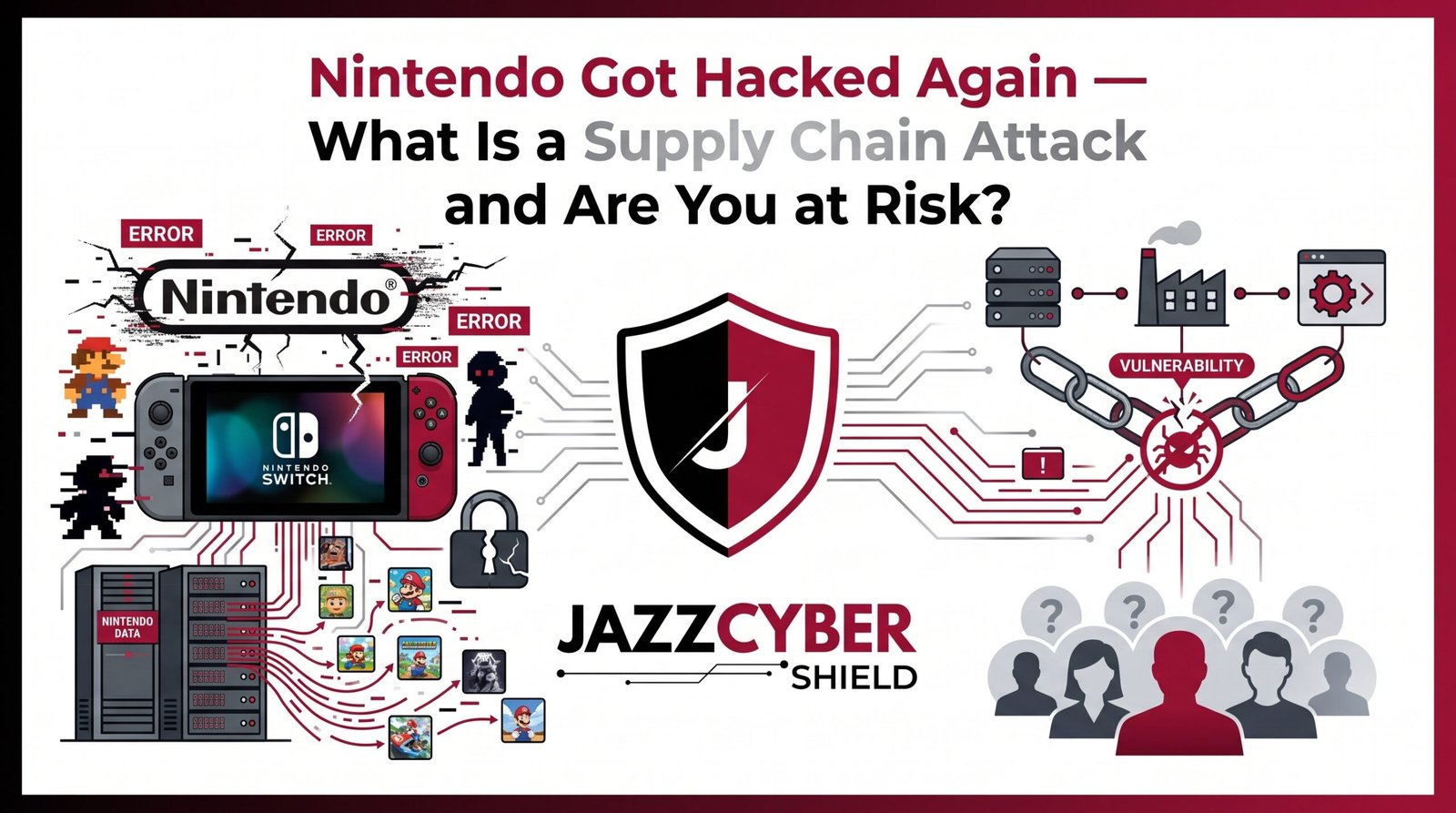
Nintendo announced in June 2025 that it had suffered a significant data breach affecting developer tools and internal systems. The attack vector? A compromised third-party software component embedded in Nintendo’s own development infrastructure. The attackers didn’t breach Nintendo directly. They compromised a supplier first.
That’s the defining feature of a supply chain attack. The target isn’t attacked directly. The attacker infiltrates a vendor, a software package, a hardware component, or a service provider that the target already trusts and uses — and rides that trust relationship straight through the front door.
Nintendo isn’t alone. SolarWinds. 3CX. MOVEit. XZ Utils. The list of major supply chain attacks from the past five years reads like a who’s-who of trusted enterprise software. These weren’t fringe products used by careless organizations. They were widely trusted tools used by careful ones.
The question this guide answers: what exactly is a supply chain attack, how do they work, and what does a small or mid-sized business actually do to reduce its exposure when the attack vector is something you deliberately trusted and installed?
Table of Contents
The Scale of Supply Chain Attacks in 2026
Supply chain attacks have grown from a sophisticated nation-state technique into one of the most commonly deployed attack methods across all threat actor categories.
The 2020 SolarWinds attack compromised 18,000 organizations including multiple US federal agencies through a single tampered software update. The 2021 Kaseya attack hit 1,500 downstream businesses through one MSP software platform. The 2023 MOVEit vulnerability exposed data from over 2,000 organizations globally through a single enterprise file transfer tool.
Each of those attacks followed the same pattern: compromise one trusted vendor, gain access to thousands of targets who trusted that vendor, execute at scale.
⚠️ ALERT: CISA and the NSA issued a joint advisory specifically warning that supply chain attacks represent one of the most significant and growing threats to US national security and private sector organizations. The advisory specifically called out software build environments, update mechanisms, and third-party code as the primary attack vectors. Read CISA’s supply chain security guidance (opens in new tab)
The numbers reflect the growth. Gartner predicted that 45% of organizations worldwide would experience a software supply chain attack by 2025 — up from less than 10% a decade ago. The prediction proved accurate. Supply chain attacks now appear in breach reports for organizations of every size, not just enterprise targets.
What makes them so effective: a single successful compromise of one trusted vendor creates access to every organization that vendor serves. The attacker’s return on investment is extraordinary. One compromise, thousands of victims.
What Is a Supply Chain Attack? How It Actually Works
A supply chain attack exploits the trust relationship between an organization and its vendors, software providers, or service partners. Understanding exactly how they work is essential to understanding how to defend against them.
SUPPLY CHAIN ATTACK — HOW IT FLOWS
━━━━━━━━━━━━━━━━━━━━━━━━━━━━━━━━━━━━━━━━━━━━━━━━━━━
STEP 1 │ ATTACKER TARGETS A VENDOR
        │ Software company, hardware manufacturer,
        │ IT service provider, or open-source project
        │ — something their real targets already trust
────────┼──────────────────────────────────────────
STEP 2 │ VENDOR GETS COMPROMISED
        │ Attacker inserts malicious code into software
        │ OR tampers with a hardware component
        │ OR compromises the vendor's update infrastructure
        │ The vendor's product looks completely normal
────────┼──────────────────────────────────────────
STEP 3 │ TRUSTED DELIVERY TO TARGETS
        │ Victims install an "update" from their vendor
        │ OR receive hardware with embedded malware
        │ OR use a service that's now compromised
        │ No social engineering needed — they trust it
────────┼──────────────────────────────────────────
STEP 4 │ ATTACKER GAINS ACCESS
        │ Malicious component runs with trusted permissions
        │ Establishes persistence on victim systems
        │ Moves laterally across victim networks
        │ Exfiltrates data or deploys ransomware
────────┼──────────────────────────────────────────
STEP 5 │ MASS EXPLOITATION
        │ Every organization using the compromised product
        │ is simultaneously at risk
        │ One compromise, thousands of victims
━━━━━━━━━━━━━━━━━━━━━━━━━━━━━━━━━━━━━━━━━━━━━━━━━━━
The psychological and technical elegance of a supply chain attack is that it weaponizes trust. Security teams train employees not to click unknown links or open suspicious attachments. But nobody tells the IT team not to install the quarterly update from their network management software — because that software has been trusted for years, and the update process is routine.
🔴 WARNING: Supply chain attacks specifically target the automatic trust that organizations extend to existing vendors and installed software. Unlike phishing, which requires a human to make a mistake, supply chain attacks succeed because the victim does exactly what they’re supposed to do — install an update, run authorized software, use a trusted service. The attack hides in legitimate behavior. Read NIST’s supply chain risk management framework (opens in new tab)
The Nintendo Breach in Context: Supply Chain Attacks on Major Brands
The Nintendo breach reported in 2025 fits a pattern that has hit some of the most security-conscious organizations in the world over the past several years. Understanding these major incidents makes the threat concrete rather than theoretical.
SolarWinds (2020) — The Blueprint
Attackers compromised SolarWinds’ Orion IT monitoring software build environment and inserted malicious code into a routine software update. The update was digitally signed by SolarWinds — legitimate in every verifiable way — and installed by 18,000 organizations. The US Treasury Department, the Department of Homeland Security, and numerous Fortune 500 companies were among the victims. The attacker was inside networks for months before detection.
Kaseya VSA (2021) — MSP as Vector
Attackers exploited a zero-day vulnerability in Kaseya’s VSA remote management platform — a tool used by managed service providers to remotely manage thousands of client businesses. The REvil ransomware group used that single vulnerability to deploy ransomware to approximately 1,500 downstream businesses through their MSPs in a single weekend. Businesses that had never heard of Kaseya got hit because their IT provider used it.
3CX (2023) — Compromised Installer
The 3CX desktop app — a widely used VoIP communications platform — was compromised at the installer level. Users who downloaded the app from 3CX’s own official website received a version containing malicious code. The attack targeted specific high-value 3CX customers in financial and critical infrastructure sectors.
MOVEit (2023) — Zero-Day in Enterprise Software
The Cl0p ransomware group exploited a previously unknown vulnerability in MOVEit, a widely used enterprise file transfer platform. Over 2,000 organizations across healthcare, government, and financial sectors had data exfiltrated before the vulnerability was even publicly known. The US Department of Energy and multiple state government agencies were among the victims.
| Attack | Vendor Compromised | Estimated Victims | Method |
|---|---|---|---|
| SolarWinds 2020 | IT monitoring software | 18,000+ orgs | Tampered software update |
| Kaseya 2021 | MSP management platform | 1,500 businesses | Zero-day exploit |
| 3CX 2023 | VoIP software | Thousands | Compromised installer |
| MOVEit 2023 | File transfer software | 2,000+ orgs | Zero-day exploit |
| Nintendo 2025 | Developer toolchain | Internal systems | Third-party component |
How Supply Chain Attacks Reach Small Businesses
Small businesses reading about Nintendo, SolarWinds, and the US Department of Energy might feel insulated from supply chain attack risk by their size. That’s a dangerous assumption.
Your MSP Is a Supply Chain
If your business uses a managed service provider, that MSP is a supply chain link. The Kaseya attack hit 1,500 small businesses specifically because their MSPs used a single vulnerable platform. When your MSP’s tools are compromised, every business they manage gets hit simultaneously. Ask your MSP directly what supply chain security practices they maintain and what monitoring they run on their own management tools.
Your Software Vendors Are a Supply Chain
Every piece of software running in your business — accounting software, CRM, email platform, backup tools — comes from a vendor whose development and update infrastructure could theoretically be compromised. You install updates from these vendors without inspecting the code, because you trust them. A supply chain attack exploits exactly that trust.
Open-Source Libraries Are a Supply Chain
If your business uses any software that’s built on open-source components — which is essentially every modern application — you inherit the security posture of those underlying libraries. The XZ Utils attack in 2024 nearly succeeded in embedding a backdoor into a core Linux compression library that ships with millions of systems worldwide.
Hardware Components Are a Supply Chain
Hardware-level supply chain attacks embed malicious components during manufacturing or distribution. These are rarer and typically nation-state grade, but they represent a supply chain attack vector that purely software-focused defenses don’t address.
⚠️ ALERT: IBM Security’s X-Force threat intelligence team has documented that supply chain attacks increasingly target small and medium businesses specifically through their managed service providers and software vendors — not through direct attacks on the businesses themselves. Your size doesn’t protect you when the attack comes through something you deliberately gave trusted access. Read IBM’s threat intelligence research (opens in new tab)
The Most Dangerous Supply Chain Attack Vectors
Not all supply chain attack vectors carry equal risk for a typical business. Here’s where the real exposure concentrates:
Software Update Mechanisms
The most documented and most dangerous vector. Attackers who compromise a vendor’s update infrastructure gain the ability to push malicious code to every customer who runs automatic updates — which most organizations do, because manual patching is even worse. The SolarWinds attack used exactly this vector.
Third-Party Libraries and Dependencies
Modern software is built on hundreds of open-source libraries. A compromise of one widely-used library propagates through every application built on it. Security researchers have documented deliberate “dependency confusion” attacks where attackers publish malicious packages with names similar to legitimate ones, waiting for automated build systems to pull them.
MSP and IT Service Provider Tools
Remote monitoring and management (RMM) tools used by MSPs represent a high-value target: compromise one RMM platform and you gain the ability to execute code on thousands of managed client devices simultaneously. This is exactly how the Kaseya attack worked.
Development and Build Environments
Compromising a vendor’s software build environment — where source code becomes the final product — allows attackers to insert malicious code that gets included in digitally signed, “legitimate” software releases. The Nintendo breach involved developer tools; the SolarWinds attack targeted the build system directly.
Hardware Distribution Channels
Less common but documented: malicious firmware or hardware implants inserted during manufacturing or distribution. Network equipment, hard drives, and USB devices have all been used as hardware supply chain attack vectors in documented incidents.
For businesses that want network-level controls that limit what compromised software can reach even when it’s already installed, a next-generation firewall with behavioral threat detection provides a critical last line of defense. Browse our firewall collection for options that include outbound traffic inspection and command-and-control detection — the network controls most likely to catch a supply chain attack in progress.
How to Defend Against Supply Chain Attacks
You cannot inspect every line of code in every vendor’s product. But you can significantly reduce the impact of a supply chain attack through a layered defense strategy.
Principle of Least Privilege
Every piece of software in your environment should run with the minimum permissions it actually needs. Software running with full administrative privileges that gets compromised becomes a complete system takeover. Software running with limited permissions that gets compromised can cause far less damage. Review and restrict software permissions across your environment.
Network Segmentation
When compromised software tries to spread laterally or exfiltrate data, network segmentation limits what it can reach. A supply chain attack that lands on one network segment shouldn’t be able to reach your financial systems, your customer data, or your backups on a different segment. Our guide on VLAN setup for networks in 2026 covers exactly how to implement this.
Monitor Outbound Traffic
Supply chain attacks typically need to communicate with attacker-controlled command-and-control servers to receive instructions and exfiltrate data. A next-generation firewall with DNS filtering and outbound traffic inspection can catch this communication even when the malware itself evades endpoint detection, because the network call to an unknown external server is detectable.
Vendor Risk Assessment
Know who your critical vendors are. Ask them about their software development security practices, their update signing processes, and what monitoring they maintain on their own build infrastructure. This doesn’t catch every attack, but it identifies which vendors represent your highest supply chain risk and focuses your attention appropriately.
Maintain Tested Backups
If a supply chain attack results in ransomware deployment or data destruction, tested backups are what determine whether you recover without paying. Keep backups isolated from your main network — a compromised software package with network access shouldn’t be able to reach your backup infrastructure.
Endpoint Detection and Response
EDR solutions that monitor behavior rather than signatures can sometimes catch supply chain attack payloads through behavioral anomalies — unusual processes making unexpected network connections, legitimate software exhibiting abnormal behavior, or known-clean files performing suspicious actions. EDR doesn’t catch everything, but it catches behavior that pure signature-based tools miss entirely.
Network Controls That Limit Supply Chain Attack Damage
Even when a supply chain attack successfully compromises a device on your network, the right network controls determine how much damage it can do.
DNS Filtering — Block the C2 Call
Most supply chain attack payloads need to call home to an attacker-controlled server for instructions, additional payloads, or to exfiltrate stolen data. DNS filtering blocks resolution of known malicious domains — cutting the attacker’s connection before data leaves your network. Cloudflare Gateway offers a free tier; business-grade firewalls include DNS filtering with live threat intelligence built in.
Outbound Traffic Inspection
Consumer routers and basic firewalls focus almost entirely on blocking inbound threats. Next-generation firewalls with deep packet inspection monitor outbound connections too — catching compromised software attempting to communicate with attacker infrastructure even over encrypted channels.
Zero Trust Network Access
The “trust but verify” model that supply chain attacks exploit doesn’t apply in a Zero Trust architecture. Zero Trust requires continuous verification of every device, user, and connection — even those already inside the network. Compromised software that’s already installed needs to authenticate and be authorized for every resource it accesses, limiting lateral movement significantly.
Segmentation Between Critical Systems
Your accounting data, customer records, and backup systems should live in network segments that aren’t reachable from general workstations or software running on them. When a supply chain attack compromises a workstation, segmentation determines whether it can pivot to your most sensitive systems or gets contained.
For businesses ready to implement these network-level controls, a managed network switch with VLAN enforcement is the hardware foundation. Browse our network switches collection for options that support enterprise-grade segmentation — the hardware layer that enforces your supply chain attack containment strategy even when software controls fail.
How to Protect Yourself: Step-by-Step
Here’s the practical action plan for reducing your supply chain attack exposure starting this week:
- Inventory your critical vendors — List every software vendor, cloud service, and IT provider your business depends on. This is your supply chain map. You can’t manage risk you haven’t identified.
- Ask your MSP about their security practices — Specifically ask what monitoring they run on their own management tools, how they vet software updates before deploying them to clients, and what their incident response plan looks like if their own tools are compromised.
- Implement least privilege for all installed software — Review what permissions your installed applications actually run with and reduce them to the minimum required. This limits blast radius when any application gets compromised.
- Deploy DNS filtering — Block known malicious domains at the DNS level to cut off command-and-control communication that supply chain attack payloads need. Takes 30 minutes to configure for most businesses.
- Deploy a next-gen firewall with outbound traffic inspection — This is your most important technical control for catching supply chain attacks in progress.
- Segment your network by criticality — Keep financial systems, customer data, and backup infrastructure on separate network segments from general workstations and software.
- Deploy behavior-based EDR — Monitor for behavioral anomalies from installed software — legitimate applications making unexpected network connections, unusual process behavior, or unauthorized system changes.
- Maintain air-gapped backups — Supply chain attacks frequently result in ransomware deployment. Tested, air-gapped backups eliminate the leverage ransomware provides.
- Monitor for unusual outbound connections — Set up alerts for new outbound connections from servers or workstations, especially to unfamiliar IP ranges or geographies.
- Create a vendor incident response procedure — What do you do when a vendor announces their software was compromised? Have the answer documented before you need it, not while you’re scrambling.
Quick Reference Checklist
Use this to assess your current supply chain attack exposure and track your defenses.
SUPPLY CHAIN ATTACK DEFENSE CHECKLIST
━━━━━━━━━━━━━━━━━━━━━━━━━━━━━━━━━━━━━━━━━━━━━━━

VISIBILITY & INVENTORY
[ ] Critical software vendors listed and documented
[ ] MSP security practices reviewed and documented
[ ] All installed software inventoried
[ ] Third-party library exposure assessed (if applicable)

NETWORK CONTROLS
[ ] Next-gen firewall with outbound inspection deployed
[ ] DNS filtering active with live threat intelligence
[ ] Network segmented — critical systems isolated
[ ] Unusual outbound connection alerting configured
[ ] VLANs enforce segment separation at hardware level

ENDPOINT CONTROLS
[ ] EDR deployed on all endpoints (behavior-based)
[ ] Software running with least-privilege permissions
[ ] Application allow-listing where practical
[ ] Auto-update timing controlled (not immediate on release)

BACKUP & RECOVERY
[ ] Air-gapped backups verified and tested
[ ] Backup infrastructure isolated from main network
[ ] Recovery time objective documented and tested
[ ] Incident response plan covers vendor compromise scenario

VENDOR MANAGEMENT
[ ] MSP security questionnaire completed
[ ] Critical vendors' breach notification procedures known
[ ] Vendor compromise response procedure documented
[ ] Supply chain incident response plan exists

━━━━━━━━━━━━━━━━━━━━━━━━━━━━━━━━━━━━━━━━━━━━━━━
Frequently Asked Questions
Q: What exactly is a supply chain attack?
A: A supply chain attack is a cyberattack that targets an organization not through a direct breach, but by compromising a vendor, software provider, hardware supplier, or service partner that the target organization already trusts. The attacker exploits the existing trust relationship — the target installs a software update, uses a trusted tool, or receives a piece of hardware — and the malicious payload rides that trust straight into the organization’s systems without requiring the victim to make any obvious security mistake.
Q: Am I at risk of a supply chain attack if I’m a small business?
A: Yes. Small businesses are exposed through two primary paths: their managed service providers (if an MSP’s tools are compromised, every business they manage is affected) and their software vendors (any widely-used business software — accounting, CRM, backup tools — could theoretically be targeted). The Kaseya attack in 2021 specifically demonstrated that small businesses suffer supply chain attack consequences even without being the intended target.
Q: Can antivirus software detect a supply chain attack?
A: Traditional signature-based antivirus typically cannot, because supply chain attack payloads are embedded in legitimately signed software from trusted vendors — the same software your antivirus already trusts. Behavior-based EDR has a better chance of catching supply chain attack payloads through anomalous behavior, but even that isn’t guaranteed. Network-level controls (DNS filtering, outbound traffic inspection) that catch the payload’s communication attempts are often more reliable for detection than endpoint tools alone.
Q: How do I know if I’ve been affected by a supply chain attack?
A: Common indicators include: unusual outbound network connections to unfamiliar IP addresses or domains; legitimate software exhibiting unexpected behavior (accessing files it shouldn’t, making unusual network calls); unexplained credential use or account access; and vendor breach notifications from software providers you use. If a vendor announces a compromise of their update system or software distribution, treat all versions installed during the potential window as suspect until the vendor provides cleared verification.
Q: What’s the most important single step I can take to reduce supply chain attack risk?
A: Network segmentation combined with outbound traffic monitoring. You cannot prevent every supply chain compromise — you don’t control your vendors’ security. What you can control is how much damage a compromised piece of software can do once it’s inside your network. Segmentation limits lateral movement; outbound monitoring catches the command-and-control communication most supply chain attack payloads need to function. Together these two controls dramatically limit the blast radius of any supply chain attack that lands on your network.
Conclusion
The Nintendo breach, SolarWinds, Kaseya, MOVEit — these aren’t isolated incidents from unusually careless organizations. They’re documented examples of a systematic attack technique that exploits one of the most fundamental properties of how organizations work: they trust their vendors. Supply chain attacks turn that trust into a vulnerability.
You can’t inspect every software update from every vendor. But you can control what happens after a compromised component lands on your network. Network segmentation limits lateral movement. DNS filtering and outbound traffic inspection catch the command-and-control communication that makes supply chain attacks function. Air-gapped backups make ransomware leverage irrelevant. EDR catches behavioral anomalies that signatures miss.
The defense against supply chain attacks isn’t a single product or setting — it’s a layered network architecture that assumes compromise will happen and limits the consequences when it does. Start with your perimeter and your network segmentation. Browse our firewall collection to find the right next-generation firewall that inspects both inbound and outbound traffic — the network control that gives you the best chance of catching a supply chain attack in progress before the damage compounds.
Related Reading
- Why Small Businesses Close After a Cyberattack
- How Ransomware Actually Works and How to Never Pay the Ransom
- VLAN for Home Network 2026: Complete Setup Guide
- Router Settings You Must Change Right Now
- The Hidden Danger of Public WiFi in 2026

