




Choosing the fastest processor for multitasking and productivity in 2025 is one of the most important decisions you make when building or buying a new PC. Whether you run dozens of browser tabs alongside video editing software, compile code while managing virtual machines, or switch between creative applications without losing momentum, the processor you choose determines how smoothly everything runs. The market in 2025 offers genuinely excellent options from Intel, AMD, and Apple — but not all of them deliver the same multitasking experience. This guide cuts through the noise and identifies the best processors for real-world productivity performance right now.
Why the Processor Matters More Than Ever for Multitasking
Modern productivity workflows demand far more from a processor than they did even three years ago. Applications have grown more complex, AI-powered features now run continuously in the background, and operating systems manage more simultaneous processes than ever before. A processor that handles multitasking well does not just have a high clock speed — it combines a high core count, large cache memory, efficient memory bandwidth utilization, and intelligent thread scheduling to keep every active application responsive simultaneously.
Single-core performance still matters for applications that do not scale across multiple cores, but true multitasking capability lives in a processor’s ability to distribute work across many cores without bottlenecks. This is why the latest generation of hybrid architecture processors from Intel and AMD, alongside Apple’s unified memory architecture chips, lead every productivity benchmark that reflects real-world usage rather than isolated synthetic tests.
AMD Ryzen 9 9950X — The Multitasking Benchmark Leader
AMD’s Ryzen 9 9950X stands as the fastest consumer desktop processor for multitasking and productivity workloads in 2025. Built on AMD’s Zen 5 architecture and manufactured on TSMC’s 4nm process node, the 9950X delivers 16 cores and 32 threads with a maximum boost clock of 5.7 GHz. It combines exceptional single-core performance with outstanding multi-core throughput that consistently leads productivity benchmarks across video rendering, 3D modeling, software compilation, and data processing tasks.
AMD’s Zen 5 architecture increases instructions per clock cycle by approximately 16 percent over Zen 4, meaning the 9950X does more useful work per clock tick than its predecessor regardless of frequency. The processor pairs with AMD’s AM5 platform, supporting DDR5 memory and PCIe 5.0 for NVMe storage, giving it a fast and future-proof foundation for demanding workstation configurations.
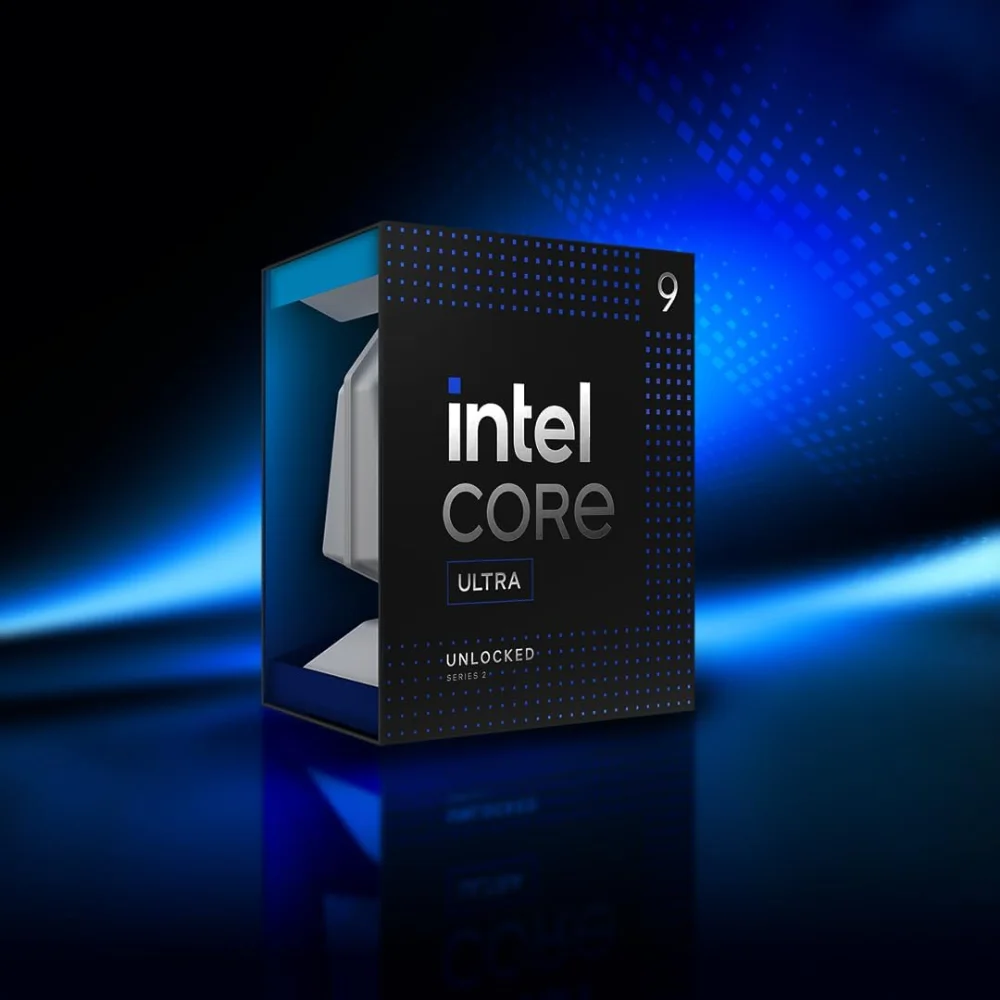
Intel Core Ultra 9 285K — Strong Productivity with Hybrid Efficiency
Intel’s Core Ultra 9 285K represents Intel’s flagship desktop productivity processor for 2025, built on the Arrow Lake architecture using Intel’s 20A process node with TSMC-manufactured tiles. It features 24 cores — eight P-cores for demanding tasks and 16 E-cores for background workloads — and delivers strong multi-threaded productivity performance that makes it a serious competitor to AMD’s Ryzen 9 lineup.
The Core Ultra 9 285K introduces an integrated NPU for the first time in Intel’s desktop lineup, enabling hardware-accelerated AI features in supported applications including Adobe Creative Cloud tools, Microsoft Copilot integrations, and real-time video enhancement. This NPU offloads AI processing from the CPU cores, keeping them fully available for the primary productivity workload rather than splitting resources between AI tasks and application performance.
Apple M4 Pro — The Productivity Champion for macOS Users
Apple’s M4 Pro chip, found in the 2025 MacBook Pro and Mac Mini, delivers some of the most impressive sustained productivity performance available in any form factor. Apple designs the M4 Pro around a unified memory architecture where the CPU, GPU, and Neural Engine share the same high-bandwidth memory pool — eliminating the data transfer bottleneck that exists between separate CPU and GPU memory pools in traditional PC architectures.
The M4 Pro features up to 14 CPU cores — ten performance cores and four efficiency cores — alongside up to 32 GPU cores and a 38 TOPS Neural Engine for AI acceleration. In real-world productivity benchmarks covering Final Cut Pro video rendering, Xcode compilation, Logic Pro music production, and multi-application switching, the M4 Pro consistently outperforms Intel and AMD desktop processors in the same price bracket when measuring performance per watt.
AMD Ryzen 9 9900X — The Best Value Productivity Processor
Not every productivity user needs the absolute maximum core count and price tag of the Ryzen 9 9950X. AMD’s Ryzen 9 9900X delivers 12 cores and 24 threads on the same Zen 5 architecture with a 5.6 GHz boost clock, and it handles the vast majority of professional multitasking workloads with performance that comes extremely close to the 9950X at a significantly lower price point.
The 9900X suits professionals who run demanding single applications alongside moderate multitasking — video editors who render while browsing and communicating, developers who compile while running local servers, and business users who work across multiple productivity suites simultaneously. It represents the strongest performance per dollar in the AMD Ryzen 9000 desktop lineup for productivity-focused buyers who do not need every available core.
What to Look for in a Productivity Processor
Selecting the right productivity processor requires matching specifications to your specific workflow rather than simply choosing the highest core count available.
Core Count and Thread Count: More cores directly improve performance in applications that distribute work across multiple threads simultaneously. Video rendering, 3D modeling, and software compilation benefit most from higher core counts.
Cache Size: Larger L3 cache keeps frequently accessed data closer to the processor cores, reducing memory latency and improving application responsiveness during heavy multitasking sessions.
Memory Support: DDR5 memory support with high-speed configurations delivers the bandwidth that modern productivity applications and AI features require. Pair your processor with fast DDR5 to avoid creating a memory bandwidth bottleneck.
Thermal Design Power: Higher TDP processors deliver more performance but generate more heat and consume more power. Match your processor choice to your cooling solution and power delivery capability to ensure sustained performance without thermal throttling under extended workloads.
Platform Longevity: AMD’s AM5 platform supports current and future Ryzen processors, giving it a longer upgrade path than Intel’s LGA1851 socket which is expected to transition with Nova Lake. Factor platform longevity into your investment decision.
Fastest Processor Comparison at a Glance
AMD Ryzen 9 9950X: 16 cores, 32 threads, 5.7 GHz boost, Zen 5 architecture — best overall desktop multitasking processor in 2025.

Intel Core Ultra 9 285K: 24 cores, 24 threads, Arrow Lake architecture with NPU — best Intel option for mixed AI and productivity workloads.
Apple M4 Pro: Up to 14 CPU cores, unified memory architecture — best sustained productivity performance for macOS users and creative professionals.
AMD Ryzen 9 9900X: 12 cores, 24 threads, 5.6 GHz boost — best value productivity processor for most professional workflows.
Conclusion
The fastest processor for multitasking and productivity in 2025 depends on your platform, budget, and workflow. The AMD Ryzen 9 9950X leads the desktop category outright for raw multitasking throughput. The Intel Core Ultra 9 285K delivers a compelling alternative with its hybrid efficiency architecture and integrated NPU. The Apple M4 Pro dominates the laptop and compact desktop category for macOS-based creative and development work. And the Ryzen 9 9900X offers the best balance of performance and value for most professional users. Identify your primary workload, match it to the right architecture, and you will build a productivity system that handles everything you throw at it without hesitation.

