



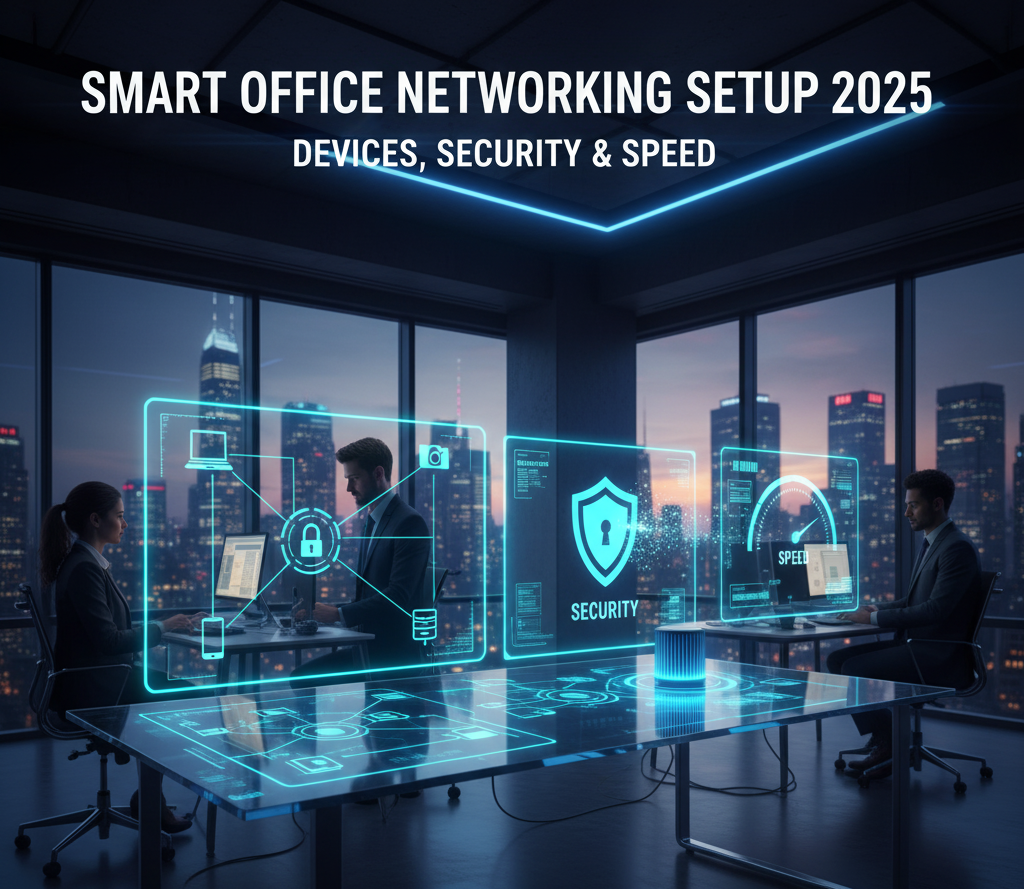
In an era where inflexibility, connectivity and productivity are more important than ever, the ultramodern office must evolve into a high-performance networking ecosystem. This composition will walk you through the key factors of a smart office networking setup for 2025, including devices, security strategies and speed optimization — and highlight how Jazz Cyber Shield can help your organization stay ahead of the curve.
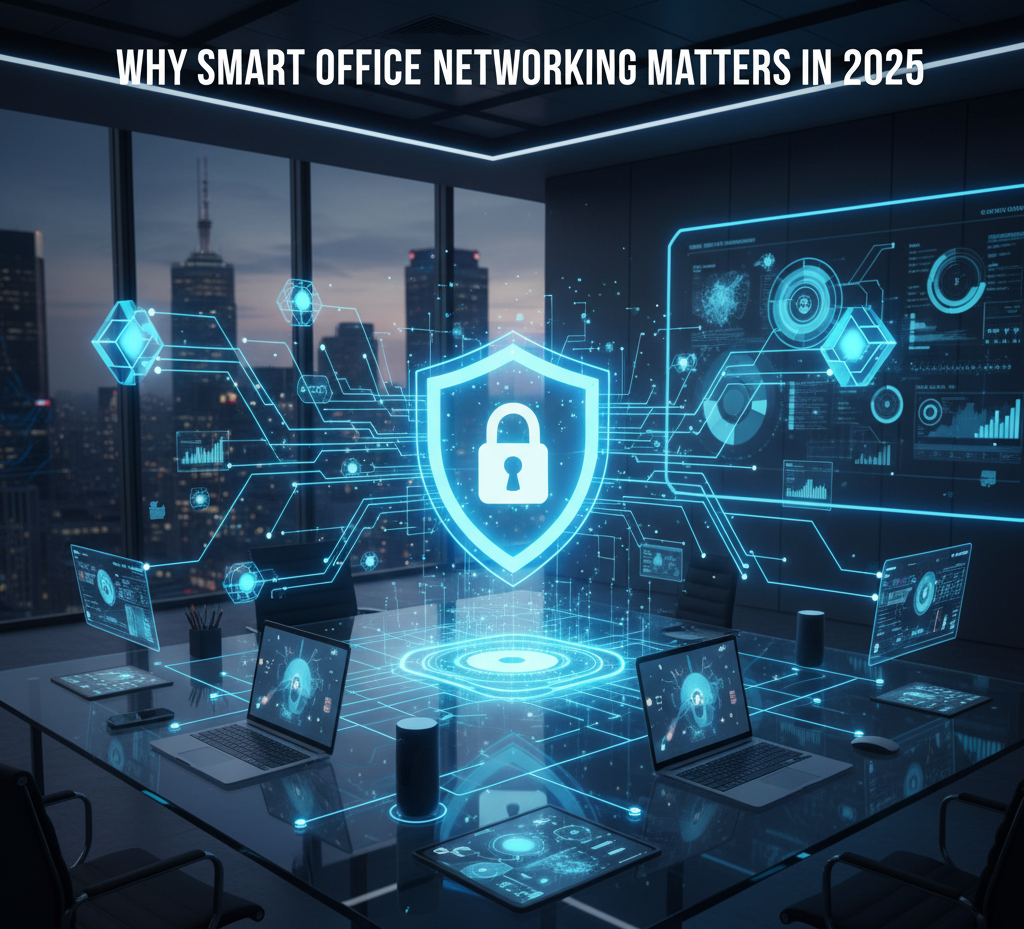
Why Smart Office Networking Matters in 2025
The concept of a “smart office” is no longer just about automatic lights or connected coffee machines. It’s about a completely integrated structure where networking, devices and security work in harmony. Industry sources show that by 2025, services will decreasingly calculate on IoT, AI, cloud services and flexible work models.
A robust smart-office network ensures
- Seamless collaboration between on-point and remote brigades
- High-speed data transfer & low quiescence to support rich media and live meetings
- Strong security to protect sensitive data in a hybrid workforce
- Scalability and future- proofing for new devices and services
These factors make smart office networking an essential investment for business durability, invention and competitive advantage.
Core Devices for Smart Office Networking
Then are the main device orders you should consider for a professional smart office setup
1. Networking structure (Switches, Routers, Wi-Fi)
- Deploy business-grade Ethernet switches and routers that support gigabit (or multi-gig) speeds and high port density.
- Ensure Wi-Fi access points support the latest norms (e.g., Wi-Fi 6/Wi-Fi 6E) and are ready for Wi-Fi 7 elaboration — meaning better outturn, lower quiescence and better running of numerous connected devices.
- Implement structured cabling or fiber chines (e.g., fiber-to-the-office) for future-evidence devices and reliability.
- Use VLANs and network segmentation to separate general office business, guest Wi-Fi, IoT devices and sensitive systems.
2. Internet of effects (IoT) & Smart devices
- Smart detectors (residency, temperature, light) automate environmental controls and reduce energy use.
- Smart locks, cameras, access control panels connect to the network and secure integration.
- Devices like digital whiteboards, collaborative screens and videotape- conferencing outfit demand high bandwidth and low quiescence.
You must treat these IoT devices not just as “nice-to-have”, but as part of the core network design with applicable bandwidth allocation, security controls and conservation.
3. Unified Dispatches & Collaboration Tools
- Cloud-based PBX systems and VoIP services support hybrid work models.
- Collaboration platforms (videotape, converse, document sharing) calculate the underlying network — so latency, jitter and packet loss must be minimized.
- One- touch meeting room results, detectors for room residency and smart scheduling tie into the network structure.
Security Strategies for Smart Office Networking
Security is no longer an afterthought. In 2025 and further, network design must embed security from the ground up:
Zero- Trust and Access Control
- Adopt the principle of “no way trust, always corroborate” (Zero- Trust). User, device and position must each be authenticated.
- Multi-factor authentication (MFA), biometric access and strong identity management are pivotal.
Network Segmentation & Secure Device Access
- Segment your network separate behaviour Wi-Fi, IoT devices, business systems and remote access channels.
- Use firewalls, intrusion detection/prevention systems (IDS/IPS) and secure access gateways.
- Ensure IoT devices, which frequently weaker in native security, are isolated and covered.
Secure Wired & Wireless Traffic
- Encrypt wireless business (WPA3 or advanced) and ensure routers APs have the latest firmware.
- For wired networks, use secure switches, physically cover cabling and cover for anomalous traffic flows.
- Prepare for advanced threats, homomorphic encryption, secure‐by‐design network armature and AI-driven trouble discovery are arising.
Monitoring, Analytics & conservation
- Deploy network monitoring tools to track device behaviour, business patterns and access logs.
- Leverage AI or analytics to proactively identify backups or security incidents.
- Maintain regular firmware updates, vulnerability scanning and device lifecycle operation.
Speed & Performance What It Takes for 2025
To support all the devices, applications and users of a smart office, performance must be top- league
- Multi-gigabit backbone: Use fiber or high-performance bobby to ensure the internal LAN (original area network) does not come with a tailback.
- High outturn Wi-Fi: With Wi-Fi 7 and advanced APs coming, anticipating conditions of 5 – 10Gbps per access point in thick office surroundings.
- Low latency & high reliability: Especially for real- time collaboration, videotape conferencing, IoT control and remote work.
- Quality of Service (QoS) and business prioritization: Prioritize voice/videotape business, IoT device aqueducts and critical business services over bulk backups or guest operation.
- Edge computing & original processing: Some tasks may run on-point (edge) to reduce pause and dependency on central cloud servers.
Implementation Roadmap How to make Your Smart Office Network
Then’s a step-by-step approach acclimatized for 2025
- Assess existing structure – inspect your current network switches, routers, cabling, Wi-Fi content and device force.
- Define business requirements –consider stoner count, remote/hybrid work models, IoT rollout, collaboration tools, behaviour access.
- Design network armature – plan wired backbone, Wi-Fi zones, VLAN segmentation, core routing, redundancy and cloud/in-house services.
- Select devices & results – pick enterprise grade switches APs, IoT detectors & cameras, collaboration tackle with high- speed anchorages.
- Apply security frame – define access programs, authentication, segmentation, monitoring and incident response plans.
- Ensure performance optimization – establish QoS, precedence business flows, backup restore plans and edge-cloud balance.
- Emplace, cover & maintain – roll out in phases, examiner performance & security, conduct regular updates, acclimatize feedback.
- Scale & future- evidence – ensures armature supports new technologies (e.g., Wi-Fi 7, 5G, agentic AI).
Conclusion
The Smart Office Networking Setup 2025 blends intelligent devices, AI-driven security, & high-speed connectivity. Businesses these technologies gain superior efficiency, better collaboration, & stronger protection. If you’re ready to upgrade your workspace, start with the right partner — Jazz Cyber Shield — your trusted source for enterprise-grade networking, cybersecurity, and IT hardware.
Jazz Cyber Shield — Future-Ready IT & Networking Solutions
At Jazz Cyber Shield, we provide next-generation networking equipment, firewalls, and cybersecurity appliances from top brands like Cisco, Fortinet, Aruba, and Ubiquiti.
Enterprise Solutions | Advanced Security | Smart Setup & Support

