



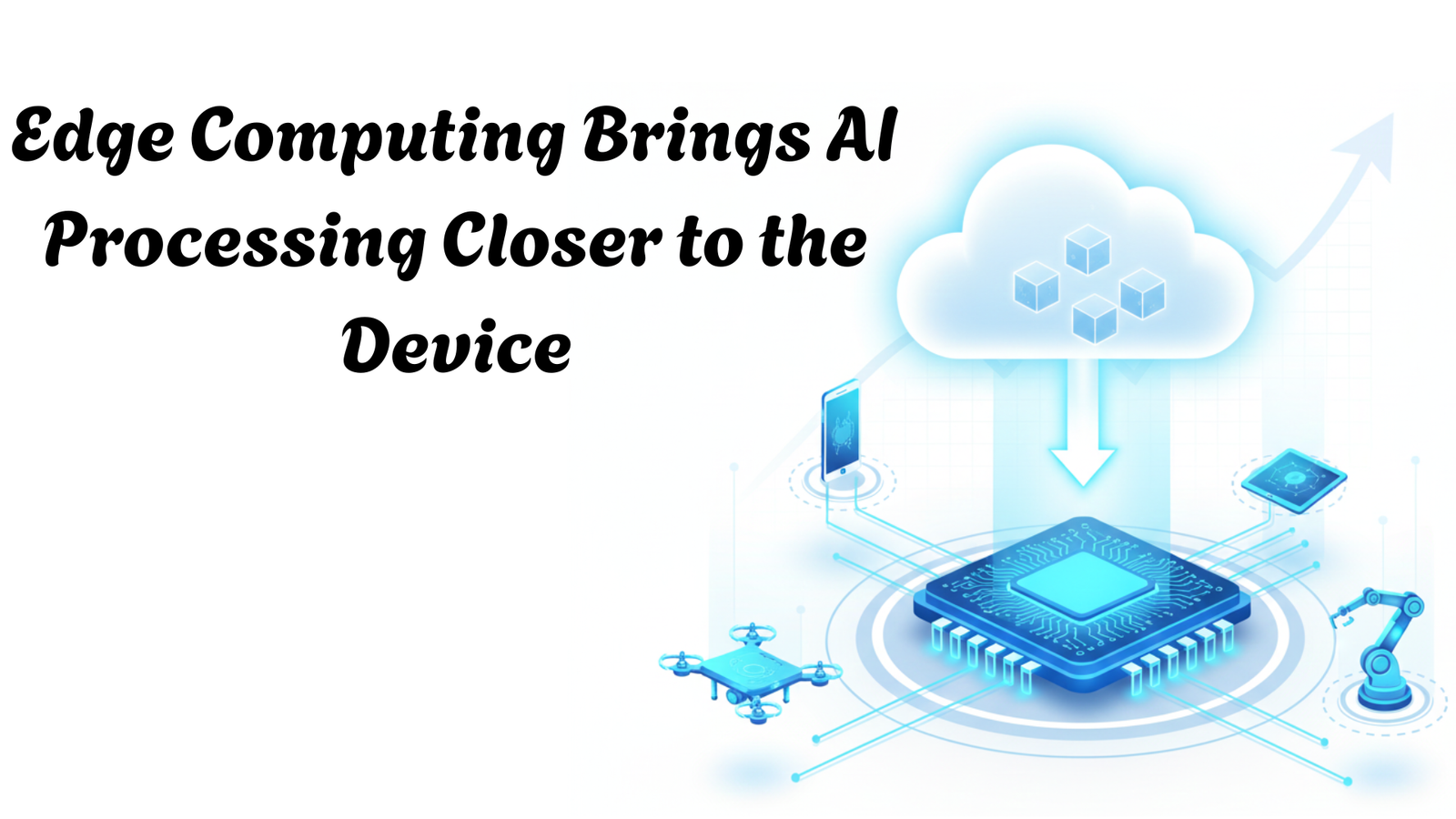
In 2026, artificial intelligence is changing direction. Instead of depending only on cloud, AI is moving closer to user. Specifically, Edge AI bring intelligence directly to devices. As a result, system respond faster, work offline & protect data better. Moreover, businesses demand real time insights & cloud only models cannot always deliver. Because of this shift, Edge AI becoming one of the most important technology trend of 2026.
What Is Edge AI & Why It Matters Now?
Edge AI mean running AI models directly on devices instead of remote cloud servers. First, these devices include smartphones, sensors, cameras, vehicles & industrial machines. Next, they process data locally. Then, they act instantly. Because of this design, Edge AI reduce delays & improve reliability.
Unlike cloud AI, Edge AI does not depend on constant internet access. Additionally, it lower bandwidth usage. Furthermore, it keep sensitive data closer to its source. As a result, Edge AI delivers speed, privacy & efficiency together.
Why Cloud Only AI Is No Longer Enough
For years, cloud computing powered AI growth. However, limitations are now clear. First, cloud processing introduce latency. Second, network outages disrupt operations. Third, data privacy concern keep increasing. Because of these issues, organizations need smarter alternatives.
Cloud AI still matters. However, Edge AI complements it. Instead of sending all data to the cloud, devices analyze information locally. Then, they send only critical insights. As a result, systems become faster, safer & more cost effective.
How Edge AI Works in 2026
Edge AI in 2026 is more powerful than ever. First, advanced chips now support on device AI processing. Next, optimized AI models consume less power. Then, software frameworks make deployment easier. Because of these advances, Edge AI is practical at scale.
Key components of Edge AI include:
- AI enabled processors & NPUs
- Lightweight machine learning models
- Local data storage & inference engines
- Secure communication with cloud systems
Together, these components allow devices to think, learn & act independently.
Major Benefits of Edge AI
Edge AI deliver clear advantages. First, it processes data instantly. Next, it improve privacy. Then, it reduce cloud costs. Because of these benefits, adoption accelerating.
Key benefits:
- Low latency: Real time decision making
- Improve privacy: Data stay on device
- Offline functionality: Work without internet
- Lower bandwidth usage: Less data sent to cloud
- Better reliability: Fewer network dependencies
As a result, Edge AI suits critical & time sensitive applications.
Edge AI Use Cases Across Industries
In 2026, Edge AI support many industries. First, healthcare use it for real time patient monitoring. Next, manufacturing relies on it for predictive maintenance. Then, smart cities deploy it for traffic control. Because Edge AI acts locally, it fits environments where speed matters.
Popular Edge AI applications include:
- Smart camera & video analytics
- Autonomous vehicle & drones
- Industrial robots & sensors
- Retail analytics & inventory tracking
- Wearable health devices
Each use case benefits from faster insights & reduced dependency on cloud systems.
Edge AI in Consumer Devices
Consumer technology also benefits from Edge AI. First, smartphones use it for image recognition. Next, smart speakers use it for voice processing. Then, wearables track health data instantly. Because of Edge AI, devices feel more responsive & intelligent.
In addition, Edge AI improve battery efficiency. Instead of constant cloud communication, devices process tasks locally. As a result, users enjoy faster performance & better privacy.
Security & Privacy Advantages of Edge AI

Security is a major reason Edge AI is growing. First, local processing reduce data exposure. Next, fewer cloud transfers limit attack surfaces. Then, sensitive data stay under user control. Because of this, Edge AI strengthen cybersecurity.
However, Edge device still need protection. Secure boot, encrypted storage & device authentication remain critical. When implemented correctly, Edge AI create a strong balance between intelligence & security.
Challenges Facing Edge AI Adoption
Despite its benefit, Edge AI challenges. First, hardware costs high. Next, limited device resource restrict model size. Then, managing thousands of edge device becomes complex. Because of these hurdles, organizations need proper planning.
Common challenges include:
- Model optimization for limited hardware
- Device management & updates
- Security at scale
- Integration with cloud systems
Fortunately, advance in chips & software continue to reduce these barriers.
Edge AI & Cloud AI: A Hybrid Future
Edge AI does not replace the cloud. Instead, it work alongside it. First, edge devices handle real time tasks. Next, cloud system manage training & analytics. Then, insights flow between both environments. Because of this hybrid approach, organizations gain flexibility.
In 2026, most AI systems combine edge & cloud intelligence. This balance deliver performance, scalability & resilience together.
Role of AI Chips in Edge Computing
AI chips drive Edge AI growth. First, specialized processors handle AI workloads efficiently. Next, they reduce power consumption. Then, they enable complex inference on small devices. Because of these chips, Edge AI becomes faster & more affordable.
Popular chip features include:
- Neural processing units
- Low power AI acceleration
- On device learning support
- Built in security modules
As chip technology improve, Edge AI capabilities expand rapidly.
Edge AI & Future of Autonomous Systems
Autonomous system depend heavily on Edge AI. First, vehicles must react instantly. Next, robots need real time awareness. Then, drones must operate independently. Because cloud delays are unacceptable, Edge AI becomes essential.
In 2026, autonomous systems increasingly trust edge intelligence. This shift improve safety, accuracy & responsiveness across applications.
What Edge AI Means for Businesses in 2026
For businesses, Edge AI deliver competitive advantages. First, it speeds decision making. Next, it reduce operational costs. Then, it improve customer experiences. Because of these benefits, organizations across sector invest heavily in Edge AI solutions.
Businesses that adopt Edge AI early gain:
- Faster insights
- Stronger data privacy
- Improved system resilience
- Reduced cloud dependency
These advantages support long term growth & innovation.
Conclusion
In 2026, Edge AI is no longer optional. It is essential. First, it solve cloud latency issue. Next, it improve privacy & security. Then, it enable real time intelligence across devices. Because technology continues to evolve, Edge AI will shape future of artificial intelligence.
Organizations that embrace Edge AI today prepare for a smarter, faster & more secure tomorrow. The shift from cloud to device intelligence is happening now & Edge AI leads the way.

