

In the recent past, every aspect of the work in our institutions has been transformed, making remote wIn the last few years, the global professional landscape has undergone a tectonic shift. What was once a “perk” for a select few has become a cornerstone of the modern economy. The rise of remote work isn’t just a temporary reaction to global events; it is a fundamental transformation in how we define “the office.” As we move through 2026, the conversation has shifted from “can we work from home?” to “how do we make remote work sustainable, secure, and productive?”
At Jazz Cyber Shield, we understand that a flexible workforce requires more than just a laptop; it requires a robust digital infrastructure and a proactive approach to security.
Key Trends Driving the Remote Work Revolution
The transition to distributed teams is fueled by several converging factors. From technological breakthroughs to shifting worker demographics, these trends are redefining professional standards.
1. Advanced Cloud and Networking Technology
The backbone of remote work is connectivity. High-speed internet, coupled with the maturity of cloud computing, allows employees to access enterprise-level data from anywhere. Technologies like Wi-Fi 7 and advanced VPN protocols have made the home office as capable as the corporate headquarters.
2. Generational Shifts in the Workforce
Millennials and Gen Z now make up the majority of the workforce. These “digital natives” prioritize flexibility and autonomy over traditional office perks. For many, the ability to work remotely is a non-negotiable factor when choosing an employer.
3. Economic and Operational Efficiency
Businesses are realizing significant cost savings by reducing their physical footprint. Lower utility bills, reduced office rent, and a smaller environmental impact are powerful incentives for companies to maintain a remote or hybrid stance.
Remote Work Trends at a Glance
| Trend | Primary Driver | Impact on Business |
| Hybrid Models | Employee preference | Better retention & reduced overhead |
| Cloud Integration | Digital Transformation | Seamless global collaboration |
| GEO/AI Search | E-E-A-T Principles | Shift in digital marketing strategies |
| IoT Security | Smart Home Office | Increased focus on network isolation |
The Critical Challenges of a Distributed Workforce
While the benefits are clear, the transition hasn’t been without its hurdles. To maintain a “green” SEO status and high user engagement, businesses must address these pain points directly.
Cybersecurity: The New Front Line
When employees work from home, the corporate perimeter disappears. Each home router becomes a potential entry point for hackers. This makes securing your home network a top priority. Without enterprise-grade firewalls or proper VLAN configuration, sensitive company data is at risk.
Mental Health and “Zoom Fatigue”
The “always-on” culture can quickly lead to burnout. Without a physical commute to act as a buffer, the lines between personal life and professional responsibilities often blur. Remote workers frequently report feelings of isolation and a lack of spontaneous collaboration.
Performance Tracking
How do you measure productivity without “desk time”? Managers are now forced to focus on output-based metrics rather than hours logged. This requires a cultural shift toward trust and clear communication.
5 Steps to Optimize Your Remote Work Setup
- Invest in Enterprise-Grade Hardware: Don’t rely on basic ISP routers. Use hardware that supports advanced security features. You can explore professional-grade options at the Jazz Cyber Shield Shop.
- Implement Zero Trust Architecture: Treat every device on your network as a potential threat until verified.
- Establish Clear Communication Norms: Use tools like Slack or Microsoft Teams for daily syncs, but respect “Deep Work” hours.
- Prioritize Ergonomics: A high-quality workspace increases longevity and focus. This includes everything from your chair to your lighting and projection setup.
- Continuous Training: Regularly update your team on the latest phishing tactics and cybersecurity best practices.
The Future: The Rise of the “Hybrid Office”
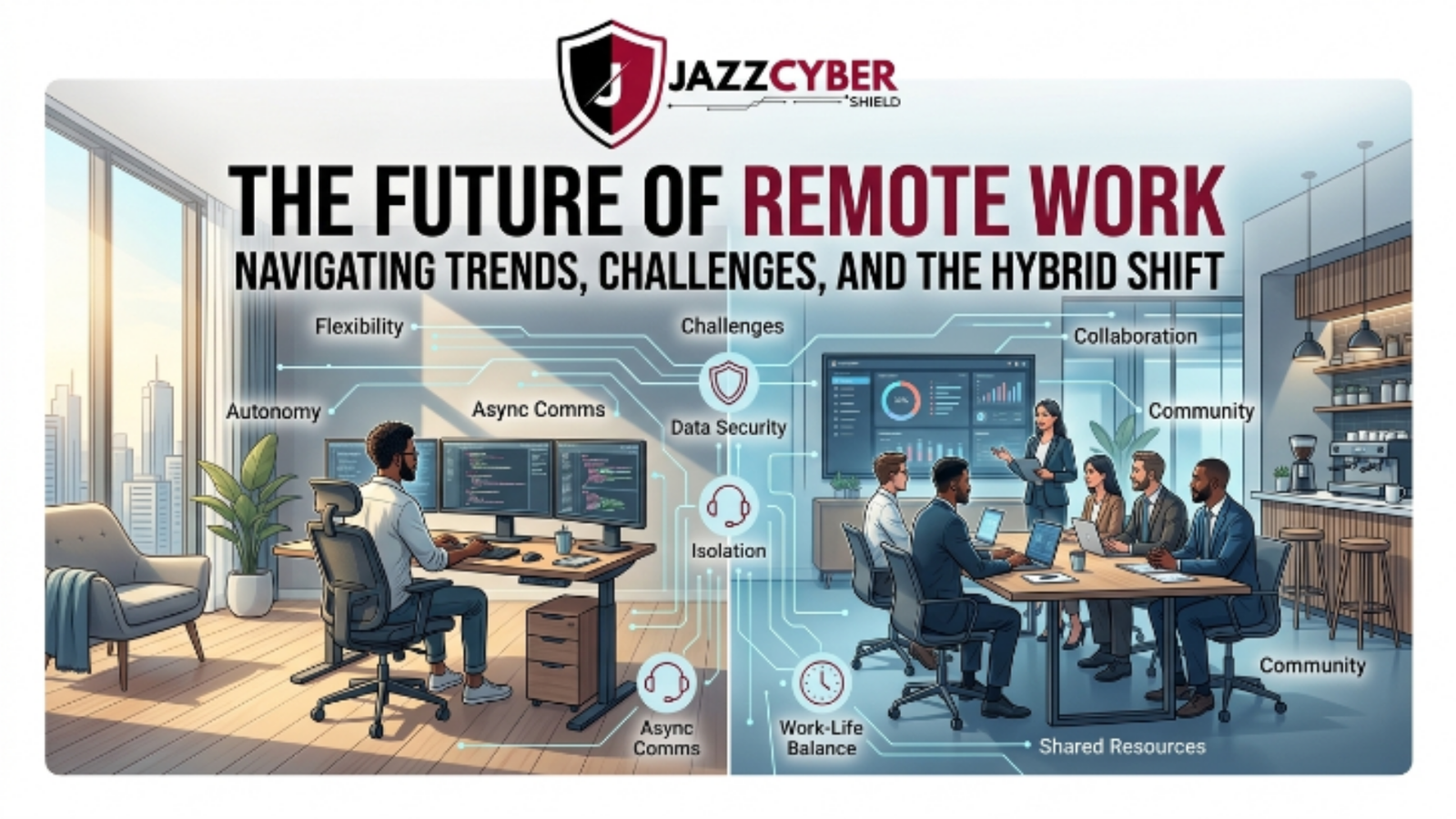
Looking ahead, the most successful organizations will likely adopt a Hybrid Work Model. This approach combines the best of both worlds: the focused productivity of remote work and the creative synergy of in-person meetings.
Why Hybrid is Winning:
- Flexibility: Employees can choose the environment that best suits their daily tasks.
- Talent Acquisition: Companies can hire the best talent regardless of geographic location.
- Resilience: As we’ve seen through various global disruptions, a distributed team is a resilient team.
According to a recent report by Gartner, organizations that embrace flexibility will see a 20% increase in employee retention by the end of 2026.
Conclusion: Emboldening the Modern Worker
The rise of remote work is a testament to human adaptability and technological progress. While challenges like cybersecurity threats and social isolation persist, the solutions are within reach through better technology and intentional management.
At Jazz Cyber Shield, we are committed to helping you navigate this new era. Whether you are looking for the latest network switches to power your office or tips on securing your smart home, we are your partner in the digital age.
Quick Summary for the Modern Professional
- Tech is Key: Reliable hardware is the foundation of remote success.
- Security First: Never compromise on firewalls or password hygiene.
- Balance Matters: Set strict boundaries to prevent burnout.
- Stay Updated: Follow high-authority sources like Forbes Technology Council for the latest industry shifts.
Ready to upgrade your remote office? Visit Jazz Cyber Shield for the latest in secure networking and hardware solutions.

