



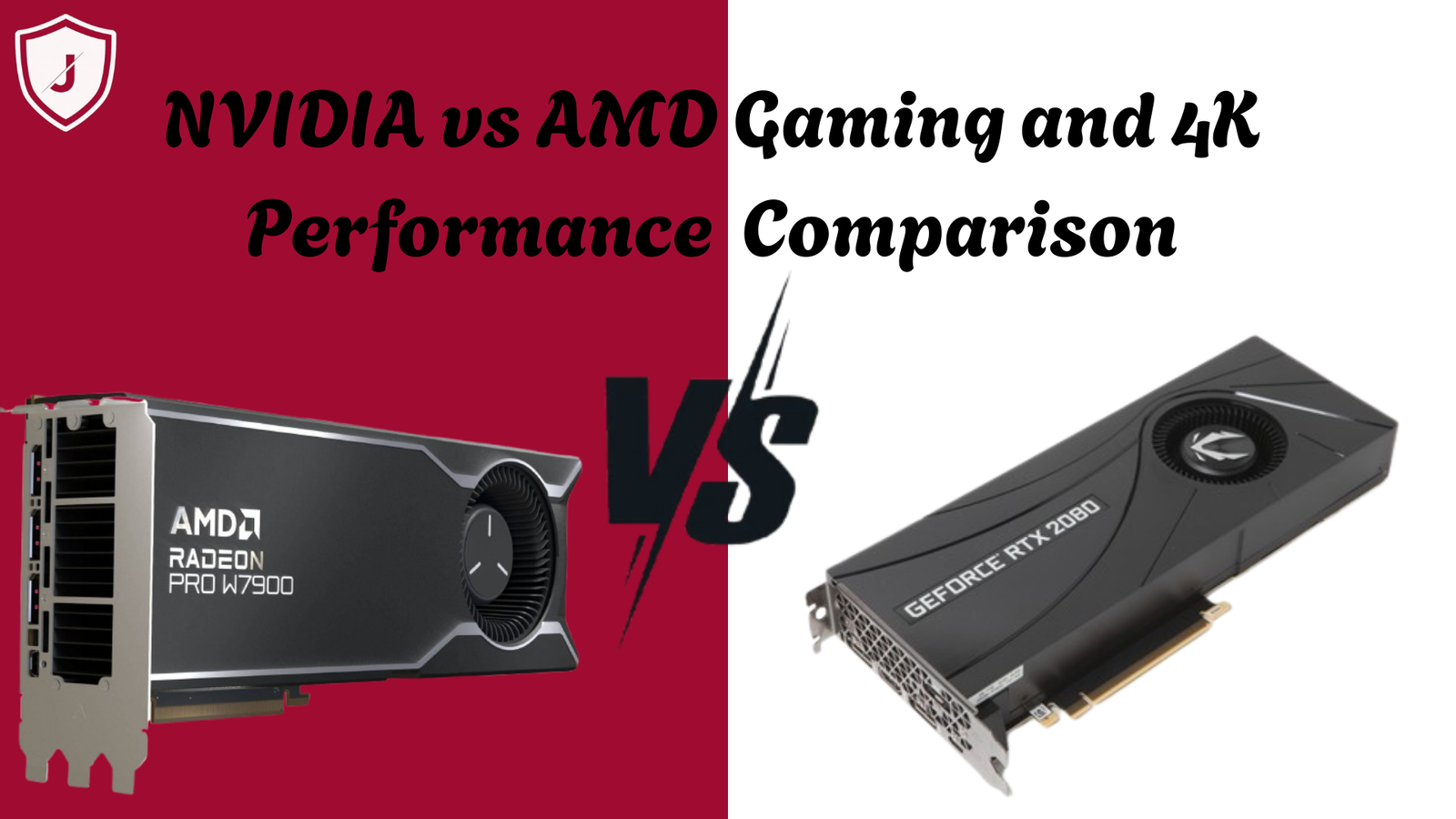
The competition between NVIDIA and Advanced Micro Devices is stronger than ever. In this NVIDIA vs AMD graphics cards 2026 guide, we provide a complete NVIDIA vs AMD GPU performance comparison based on gaming, content creation, ray tracing, pricing, and efficiency. Moreover, both brands now offer powerful GPUs across entry-level, mid-range, and flagship segments. Therefore, choosing the best GPU NVIDIA or AMD 2026 depends on your resolution, budget, and feature priorities.
The GPU market in 2026 focuses heavily on AI upscaling, 4K gaming, and efficiency improvements. Furthermore, new architectures have improved performance per watt and driver stability. As a result, gamers, streamers, and creators must carefully evaluate performance, features, and long-term value. This guide targets esports players, 4K gamers, VR users, and professionals comparing NVIDIA vs AMD for video editing or high-FPS gaming builds.
Brand Overview: NVIDIA vs AMD
NVIDIA continues to lead in AI-powered graphics innovation. Its RTX 40 and RTX 50 series GPUs focus on DLSS, real-time ray tracing, and CUDA acceleration. Additionally, RTX GPUs perform exceptionally well in creative workloads and streaming tasks. Because of strong ecosystem support, NVIDIA remains popular among professionals and high-end gamers.
AMD, on the other hand, competes aggressively with its Radeon RX 7000 and RX 8000 series. RDNA 3 and RDNA 4 architectures deliver improved efficiency and better raster performance. Moreover, AMD often wins in RTX vs RX price to performance comparisons in the mid-range segment. Therefore, budget-conscious gamers frequently prefer Radeon GPUs.
GPU Architecture Comparison
NVIDIA’s Ada Lovelace and newer Blackwell architecture enhance Tensor cores and RT cores. As a result, NVIDIA vs AMD ray tracing performance discussions often favor NVIDIA. DLSS frame generation also boosts FPS significantly in supported games. Furthermore, NVIDIA integrates AI deeply into gaming and creative workflows.
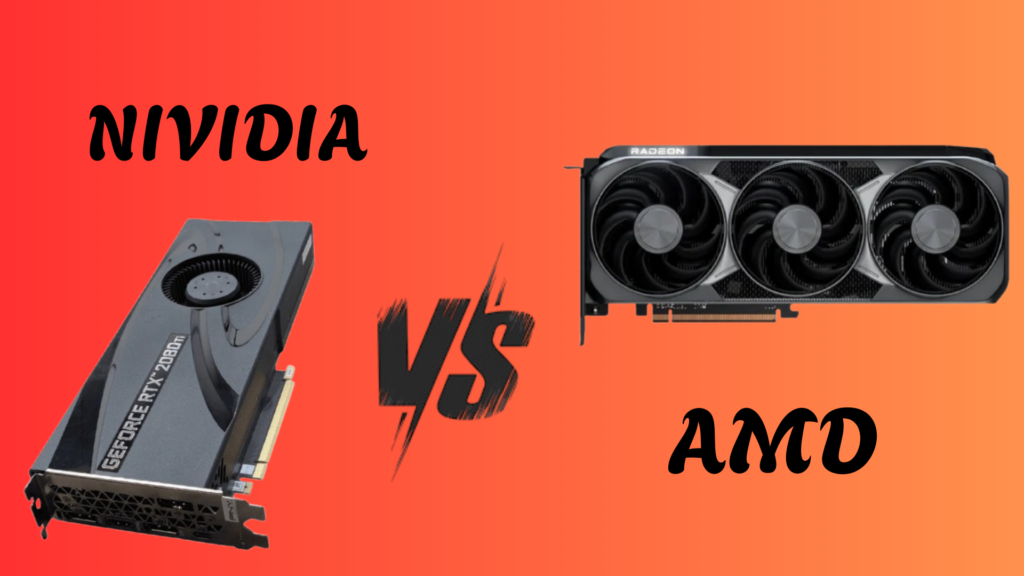
AMD’s RDNA 3 and RDNA 4 architectures improve compute efficiency and ray accelerators. Additionally, RDNA 4 narrows the ray tracing gap compared to previous generations. However, NVIDIA still leads in AI-based technologies. Therefore, the architectural difference directly affects gaming benchmarks and productivity workloads.
Performance Comparison
Gaming Performance
In many RTX vs Radeon gaming benchmarks, AMD delivers excellent 1080p and 1440p raster performance. Therefore, AMD vs NVIDIA for esports gaming often favors AMD in competitive titles. High FPS at lower cost makes Radeon GPUs attractive for budget builds.
For AMD vs NVIDIA for 4K gaming, high-end RTX GPUs usually lead when ray tracing and DLSS are enabled. However, Radeon flagship cards remain competitive in pure raster 4K performance. In addition, for immersive experiences, RTX vs RX for VR gaming often favors NVIDIA due to stronger driver optimization and frame stability.
Content Creation Performance
In NVIDIA vs AMD for video editing, NVIDIA typically leads due to CUDA acceleration and NVENC encoding. As a result, video exports and streaming workflows run more efficiently on RTX GPUs. Furthermore, RTX cards are widely optimized for professional creative software.
In the RTX vs Radeon for streaming comparison, NVIDIA again holds an advantage because of encoder quality and lower CPU usage. Although AMD has improved encoding, NVIDIA maintains broader support across platforms.
Ray Tracing & AI Upscaling
The NVIDIA DLSS vs AMD FSR comparison is central in 2026. DLSS uses AI Tensor cores to upscale images while preserving quality. Consequently, gamers experience higher FPS with strong image clarity. Moreover, DLSS frame generation improves smoothness in demanding titles.
FSR works across multiple GPU brands, which increases accessibility. However, because it relies less on dedicated AI hardware, it may not always match DLSS in motion clarity. In overall NVIDIA vs AMD ray tracing performance, NVIDIA still leads, although AMD continues closing the gap.
Price-to-Performance Ratio
In the budget AMD vs NVIDIA graphics cards category, AMD often delivers more FPS per dollar. Therefore, entry-level and mid-range buyers frequently choose Radeon GPUs. Additionally, AMD pricing remains competitive in value-focused builds.
In the RTX vs RX price to performance debate at the mid-range level, both brands compete closely. NVIDIA offers better ray tracing and AI features. Meanwhile, AMD focuses on raster value. At the flagship level, NVIDIA dominates peak performance, but AMD sometimes provides a lower-cost alternative.
Power Consumption & Thermals
The NVIDIA vs AMD power consumption comparison shows that NVIDIA generally offers strong performance per watt. RTX GPUs maintain efficient thermals under load. Furthermore, many premium models include advanced cooling systems.
AMD has improved efficiency significantly with RDNA 4. However, some high-end Radeon GPUs may draw slightly more power during heavy workloads. Therefore, users should consider PSU capacity and airflow before purchasing.
Software & Driver Support
The discussion around AMD vs NVIDIA drivers stability has shifted in recent years. NVIDIA maintains a strong reputation for stable, game-ready drivers. Moreover, updates often align with major game launches.
AMD has significantly improved driver reliability and software tools. Additionally, Radeon Software includes performance tuning features. While NVIDIA still leads in CUDA-based professional applications, AMD now provides a competitive gaming experience.
Key Performance Highlights
- NVIDIA vs AMD graphics cards 2026 shows tight competition across all price segments
- NVIDIA vs AMD GPU performance comparison favors NVIDIA in ray tracing and AI
- RTX vs Radeon gaming benchmarks often favor AMD in raster value
- AMD vs NVIDIA for 4K gaming leans toward RTX with DLSS enabled
- RTX vs RX for VR gaming slightly favors NVIDIA for stability
Feature & Value Comparison
- NVIDIA DLSS vs AMD FSR comparison shows DLSS leading in image quality
- RTX vs RX price to performance favors AMD in budget and mid-range
- NVIDIA vs AMD for video editing favors NVIDIA due to CUDA
- RTX vs Radeon for streaming favors NVIDIA encoder quality
- NVIDIA vs AMD power consumption comparison slightly favors NVIDIA efficiency
Final Verdict: Which GPU Brand Is Better?
If you want the most advanced ray tracing, AI upscaling, and creative acceleration, NVIDIA remains the stronger choice. However, if you want better value and strong raster performance, AMD delivers excellent results. Therefore, the answer to best GPU NVIDIA or AMD 2026 depends on your workload, budget, and feature priorities.
In 2026, both brands offer powerful GPUs. Ultimately, compare performance targets, pricing, and software needs before making your final decision.

