



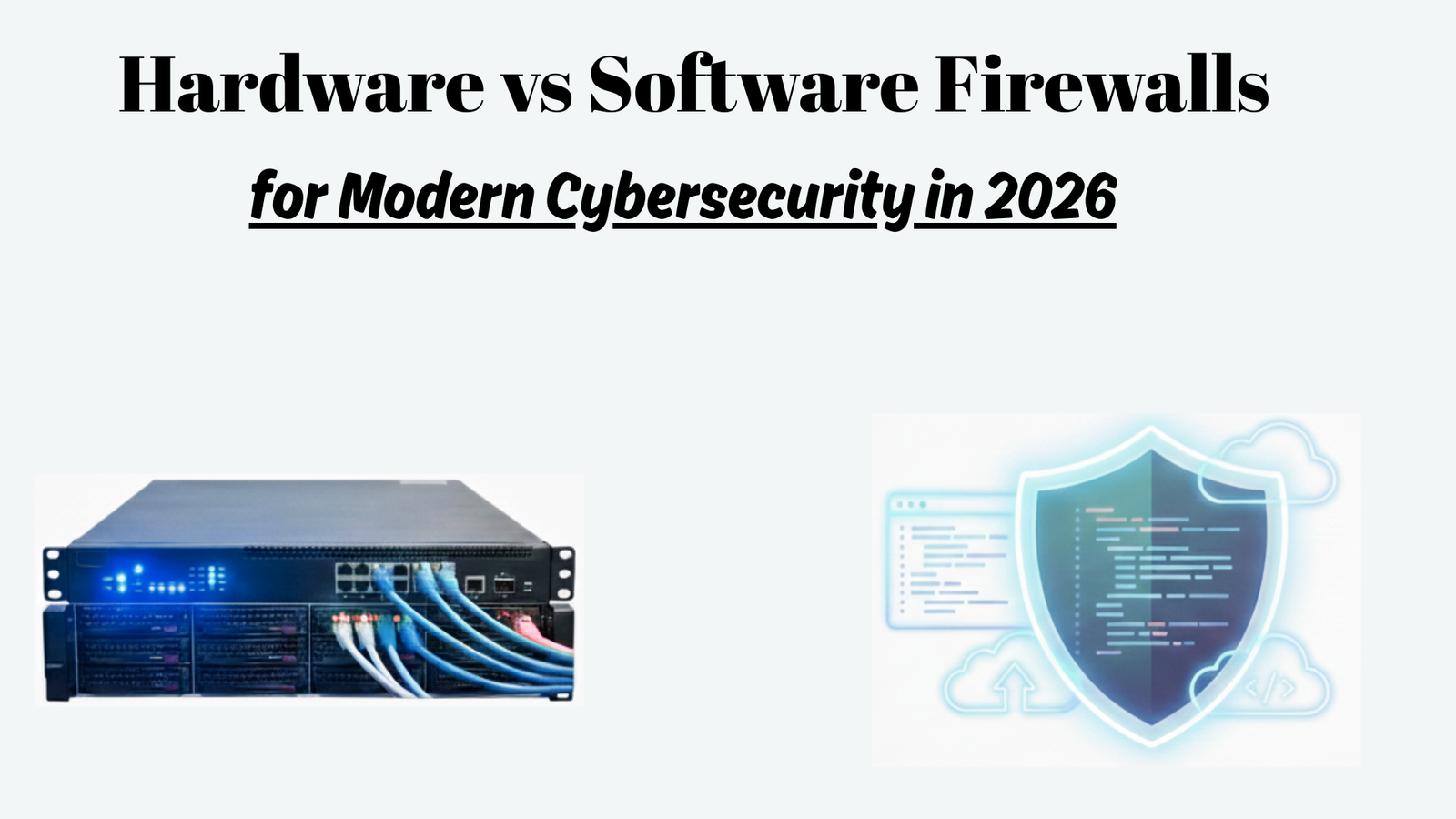
Cybersecurity evolved rapidly in 2026. Therefore, organizations now face advanced digital threats. Moreover, attackers use automation & AI tools daily. As a result, firewalls remain a core defense layer. Hardware firewalls & software firewalls dominate security strategies. However, each option works differently. Thus, businesses must understand both before choosing a solution.
What Is a Hardware Firewall?
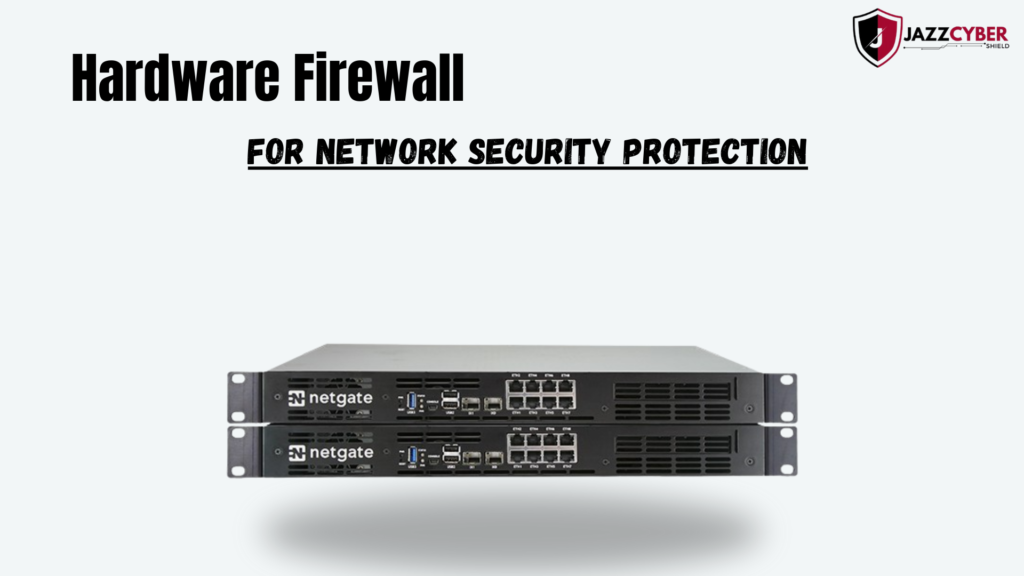
Hardware firewalls are physical security devices. First, they sit between the internet & the internal network. Then, they filter traffic before it reaches systems. Moreover, they protect every connected device at once. In addition, they handle large traffic volumes easily. Therefore, enterprise depend on them for perimeter security. Consequently, they reduce exposure to large scale cyberattacks.
What is a Software Firewall?

Software firewalls operate at the device level. First, they install directly on computers or servers. Then, they monitor inbound & outbound traffic. Moreover, they apply rules per application. Additionally, they adapt quickly to new threats. Therefore, they work well for remote & hybrid teams. In the result, they provide strong endpoint protection in modern workplaces.
Key Differences at a Glance
Understanding differences are essential. Therefore, the table below highlights core features. Moreover, it simplifies decision making. Additionally, it compares performance, cost & use cases clearly.
| Feature | Hardware Firewall | Software Firewall |
|---|---|---|
| Deployment | Physical device | Installed program |
| Protection Scope | Entire network | Individual device |
| Performance | High-speed, dedicated | Uses system resources |
| Scalability | Best for large networks | Easy for small teams |
| Cost | Higher upfront | Lower initial cost |
| Best Use Case | Enterprise security | Remote workforce |
Performance & Speed in 2026
Performance remain critical in 2026. First, hardware firewalls use dedicated processors. Therefore, they deliver consistent speed. Moreover, they reduce network bottlenecks. In contrast, software firewalls share system resources. However, modern hardware reduces this impact. Thus, both options perform well today. Nevertheless, hardware firewall still lead in high traffic environments.
Security Feature & Threat Detection
Security features have advanced significantly. First, both firewall types now use AI-driven threat detection. Moreover, deep packet inspection improve visibility. Additionally, real-time monitoring blocks zero day attacks. However, hardware firewalls stop threats at the network edge. Meanwhile, software firewalls block threats locally. Therefore, layered defense has become standard approach.
Cost, Management & Flexibility
Cost plays a major role in decisions. First, hardware firewalls require higher upfront investment. However, they offer long term stability. Meanwhile, software firewalls cost less initially. Moreover, they deploy quickly & update easily. Therefore, startups prefer software-based protection. Nevertheless, large organizations choose hardware solutions for scalability & control.
Cloud Adoption & Remote Work Impact
Cloud usage continues to rise. First, remote work remains common across industries. Therefore, firewall flexibility is essential. Software firewalls integrate easily with cloud platforms. Moreover, they protect users outside office. However, hardware firewalls secure on-premise systems better. Thus, combining both creates stronger security coverage across environments.
Which Firewall Wins in 2026?
There is no single winner. First, hardware firewalls excel at network wide protection. Meanwhile, software firewalls shine at endpoint defense. Moreover, modern threats target multiple layers. Therefore, hybrid firewall strategies win overall. Consequently, organizations using both achieve better security, visibility & compliance in 2026.
Why Businesses Choose Jazz Cyber Shield
Jazz Cyber Shield delivers modern firewall strategies for today’s threats. First, it designs layered security architectures. Moreover, it supports both hardware & software firewall models. In addition, it aligns protection with cloud & remote needs. Therefore, businesses gain reliable, future ready cybersecurity.
Final Thoughts
Firewall remain essential in 2026. First, cyber threats continue to grow. Moreover, attack methods evolve constantly. Therefore, informed choices matter. Hardware & software firewalls both add value. However, using them together offers the strongest defense. Thus, businesses that plan ahead stay secure & resilient.


Excellent article with deep insights into modern firewall technology. The pros and cons of both hardware and software firewalls are explained very clearly. It helped me understand which option fits different business needs in 2026. Highly recommended for network security readers.
This is a very well-structured and informative blog. The comparison between hardware and software firewalls is explained in a clear and unbiased way. I really liked how real-world use cases for 2026 were discussed. It’s a valuable read for IT professionals planning future security strategies.