




The connectivity landscape is changing faster than most people realize, and GPMI technology stands at the center of that transformation. General Purpose Media Interface — GPMI — is an emerging high-speed connectivity standard developed by a consortium of Chinese technology companies that combines ultra-high-speed data transfer, display output, and power delivery into a single unified cable interface. In 2025, GPMI moves from specification paper to real hardware deployments, and the technology community is paying close attention.
What Is GPMI Technology?
GPMI stands for General Purpose Media Interface. It is a next-generation connectivity standard developed primarily by Chinese technology companies including HiSilicon, a semiconductor subsidiary of Huawei, alongside a broader industry consortium. GPMI is designed as a comprehensive all-in-one cable standard that simultaneously handles display signal transmission, high-speed bidirectional data transfer, and power delivery — all through a single physical connector.
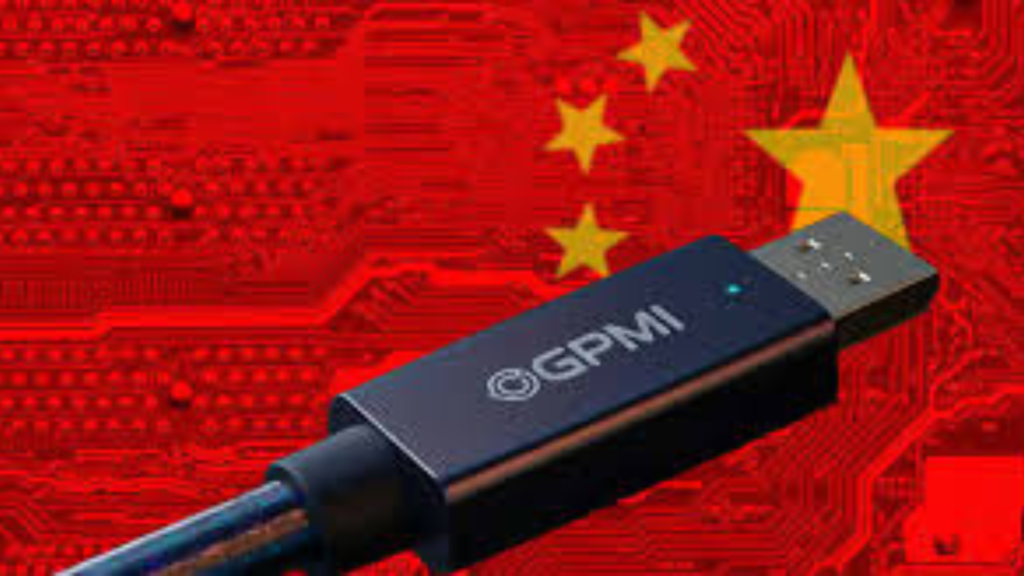
GPMI directly competes with and in several specifications surpasses both HDMI 2.1 and DisplayPort 2.1 — the two dominant display connectivity standards currently in widespread use. It also competes with USB4 and Thunderbolt 5 on the data transfer and power delivery dimensions, making it one of the most ambitious connectivity standards ever proposed for the consumer electronics market.
GPMI Technical Specifications: The Numbers That Matter
The technical specifications that GPMI delivers in 2025 establish it as a genuinely high-performance standard rather than a marketing exercise.
GPMI Type-B delivers a maximum bandwidth of 192 Gbps — a figure that dwarfs HDMI 2.1’s 48 Gbps maximum and comfortably exceeds DisplayPort 2.1’s 80 Gbps ceiling. This bandwidth capacity supports uncompressed 16K resolution display output at high refresh rates, making it a forward-looking specification that anticipates display technology development well beyond what the current market offers at the consumer level.
GPMI Type-C, using the USB Type-C physical connector, delivers up to 96 Gbps of bandwidth — still double the throughput of DisplayPort 2.1 and exactly double the bandwidth of Thunderbolt 5’s 120 Gbps specification when accounting for protocol overhead differences. For most practical display and data transfer applications in 2025, 96 Gbps represents enormous headroom beyond current requirements.
How GPMI Compares to HDMI, DisplayPort and Thunderbolt
Understanding GPMI’s competitive position requires a direct comparison against the standards it challenges.
HDMI 2.1 currently supports a maximum of 48 Gbps bandwidth, enabling 4K at 144Hz or 8K at 60Hz with Display Stream Compression. GPMI Type-B’s 192 Gbps bandwidth supports the same resolutions without compression at far higher refresh rates and extends to 16K output that HDMI 2.1 cannot approach. For display manufacturers planning next-generation panels, GPMI offers a pathway that HDMI 2.1 simply cannot provide.
DisplayPort 2.1 delivers 80 Gbps maximum bandwidth and supports 16K resolution with compression or 8K without compression at 60Hz. GPMI Type-B more than doubles this bandwidth while adding integrated power delivery that DisplayPort cannot natively provide. DisplayPort remains the preferred standard for direct monitor connections in the professional display market, but GPMI challenges this position directly for any manufacturer willing to adopt the new standard.
Real-World Applications of GPMI in 2025
GPMI technology unlocks several practical use cases in 2025 that existing standards handle poorly or cannot address at all.
Professional Display Workflows: Video editors, motion graphics artists, and broadcast professionals working with 8K and emerging 16K content benefit immediately from GPMI’s uncompressed high-resolution signal transmission. Current standards require either compression or multiple cables to handle these resolutions reliably. GPMI handles them through a single cable without compression artifacts.
Single-Cable Workstation Docking: GPMI enables true single-cable docking solutions where one GPMI cable simultaneously delivers 4K or 8K display output, full-speed bidirectional data transfer to peripherals and storage, and up to 240 watts of laptop charging power. Current Thunderbolt 5 docks approach this but require premium hardware and Intel-certified components. GPMI achieves it without proprietary certification overhead.
Consumer Electronics Integration: GPMI’s adoption by Chinese consumer electronics manufacturers — including television, monitor, and smartphone brands — creates a practical pathway for the standard to reach mass-market devices rapidly. When GPMI appears in widely sold televisions and displays, its presence creates pressure on component manufacturers to support it across product categories.
Gaming and High-Refresh Display Connectivity: Gaming monitors at 4K 240Hz and above currently push the limits of HDMI 2.1. GPMI’s bandwidth headroom accommodates 4K at 480Hz and 8K at high refresh rates without compression, positioning it as the natural connectivity choice for next-generation gaming display technology as panel refresh rates continue climbing.
Challenges GPMI Faces in Reaching Global Adoption
GPMI’s technical credentials are genuinely impressive, but several real-world challenges stand between its current specifications and widespread global adoption.
The standard’s primary development by Chinese technology companies creates geopolitical complexity in markets where regulatory and trade policy affects technology adoption decisions. Major display and computing device manufacturers in the United States, Europe, South Korea, and Japan have not yet committed publicly to GPMI adoption, and without their participation the standard risks remaining a China-centric specification regardless of its technical merits.
Why GPMI Technology Matters Beyond Its Specifications
The significance of GPMI extends beyond any individual bandwidth or power delivery figure. It represents the most serious challenge to the Western-dominated connectivity standards ecosystem in the history of consumer electronics connectivity. If GPMI achieves meaningful adoption — even within the Chinese domestic market, which represents a substantial portion of global consumer electronics production and consumption — it establishes a precedent for alternative connectivity standards that could fragment the current ecosystem or force existing standards bodies to accelerate their own roadmaps.
Conclusion
GPMI technology in 2025 arrives with technical specifications that genuinely challenge every established connectivity standard in the display and data transfer market. With 192 Gbps bandwidth in its Type-B variant, 240 watts of power delivery, uncompressed 16K display support, and a USB Type-C compatible variant that leverages existing cable infrastructure, GPMI makes a compelling technical case.

