



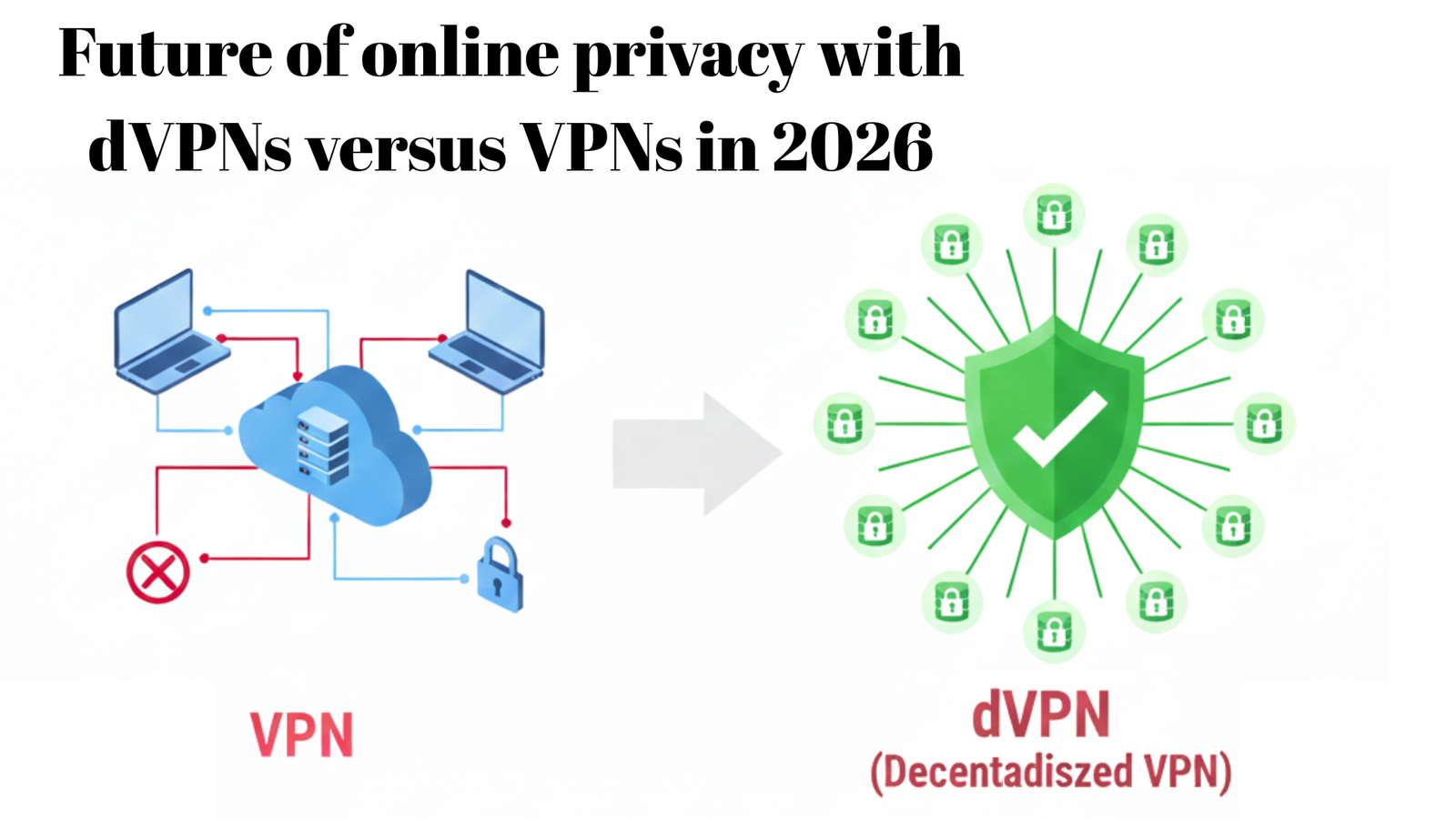
Online privacy important than ever in 2026. Many people rely on VPNs to protect their data, but technology changing game decentralized VPNs (dVPNs). Unlike traditional VPNs, dVPNs not depend on central server. Instead, they use a network of node shared by user worldwide. Because of this, dVPNs offer stronger privacy, better security & freedom online.
Understanding the difference between VPNs & dVPNs essential if want to protect data & avoid surveillance.
What is a VPN & How It Works
A VPN or Virtual Private Network, create a secure connection between your device & the internet. First, it encrypts your traffic. Next, it route traffic through a server run by VPN provider. Then, it hide IP address so website not track your location.
VPNs are useful for:
- Accessing blocked websites
- Protecting personal data from public Wi-Fi
- Hiding online activity from your ISP
However, VPNs have some drawbacks:
- Servers can log activity
- Centralized server fail or be hacked
- Some governments forces VPN provider to share data
Because of these limitation VPNs helpful but not perfect.
What is a dVPN & How It Works
A decentralized VPN or dVPN, works differently. Instead of sending your data through a central server, it passes your traffic through multiple nodes contributed by users. First, your traffic is encrypted at each step. Next, it is sent across various nodes around the world. Then, no single entity see all your data.
Key benefits of dVPNs over VPNs:
- No central point of failure
- Stronger privacy, since no single provider controls data
- Better resistance to censorship
- Community driven network improvements
In short, dVPNs protect user more effectively while giving more control to the community.
Privacy & Security: VPN vs dVPN
VPNs encrypt data, but central server log activity. In contrast, dVPNs spread traffic across multiple nodes, making it harder for anyone to track.
dVPNs also reduce risk of attacks. VPN servers be hacked, exposing sensitive information. However, with dVPNs, compromising a single node does not reveal entire network. Some dVPNs even use blockchain to add transparency & prevent tampering.

Privacy comparison:
- VPN: Encryption, but central servers may log traffic
- dVPN: Distributed encryption, no central control, resistant to attacks
For people who care about strong privacy, dVPNs are the clear choice.
Performance & Reliability
Performance use to be a weakness for dVPNs. Multiple nodes could slow down connections. VPNs had faster speeds because traffic goes through fewer servers.
Now, in 2026, improvements like AI traffic routing & optimized nodes make dVPN speeds much faster. Plus, dVPNs automatically reroute traffic if a node fails.
Comparison:
- VPN: Usually fast, but & slow down if server are crowded
- dVPN: Slightly more hops, but modern networks reduce lag & increase uptime
This means you get good speeds with dVPNs while enjoying stronger privacy protections.
Cost & Accessibility
Most VPNs charge subscription fees to maintain servers. dVPNs often work on token based systems or community contributions. Users can earn rewards by hosting nodes.
dVPNs are also harder to block. Governments shut down VPN servers, but they can not easily stop all decentralized nodes. Some dVPNs even offer free plans for user, making privacy more accessible.
Resistance to Censorship
Governments sometime restrict online content. VPNs bypass some blocks, but centralized servers be pressured to comply with laws.
dVPNs are harder to censor. First, traffic goes through multiple nodes. Next, no single entity control the network. Then, open source protocols make it transparent. This make dVPNs ideal for user who need unrestricted access to the internet.
User Control & Governance
VPN users depend on companies to manage servers. Policies change without notice & breaches compromise privacy.
dVPNs use decentralized governance. Users can:
- Vote on network rules
- Propose improvements
- Operate nodes for rewards
This make the network more accountable & reduce the risk of central control.
Edge Cases & IoT Applications
dVPNs are not just for web browsing. In 2026, decentralized networks protect:
- Smart home devices
- Wearables
- Autonomous systems
- Industrial IoT networks
Because data can be encrypted & processed across nodes, dVPNs protect sensitive information from hackers & surveillance.
Jazz Cyber Shield
Jazz Cyber Shield track innovations like dVPNs because they affect cybersecurity strategies. As privacy shift from centralized server to decentralized network, organizations need guidance on protecting data, securing nodes & staying compliant. Jazz Cyber Shield help business adopt decentralized solution safely while maintaining robust online privacy & security practice.
Choosing Between VPN & dVPN
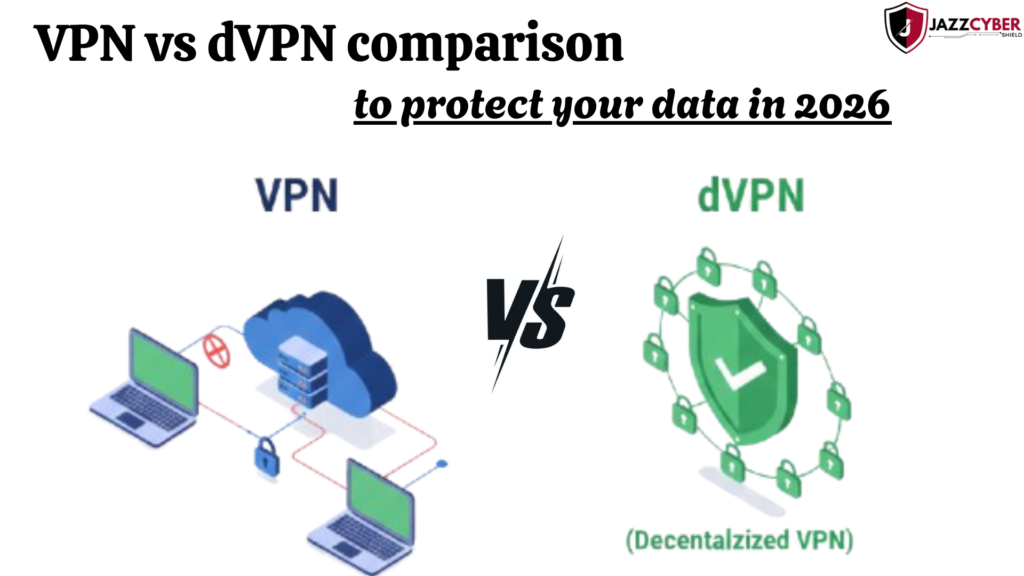
When should you use a VPN & when should you switch to a dVPN?
VPN is best for:
- Stable, fast connections
- Simpler setup
- Well-known, trusted provider
dVPN is best for:
- Maximum privacy
- Avoiding censor-ship or surveillance
- Participating in community driven networks
- Protecting IoT & smart devices
For privacy conscious users in 2026, dVPNs provide the strongest protection.
Conclusion
dVPNs are shaping the future of online privacy. First, they remove central points of control, reducing risk. Next, they provide stronger security & resistance to censorship. Then, they allow user to participate in governance & contribute to the network.
While traditional VPNs still useful for speed & convenience, dVPNs clear choice for anyone who values privacy, security & freedom online. As decentralized network grow, they will re-define how we browse, communicate & protect our digital lives.

